

2026 Event Budget Template: A Comprehensive Guide
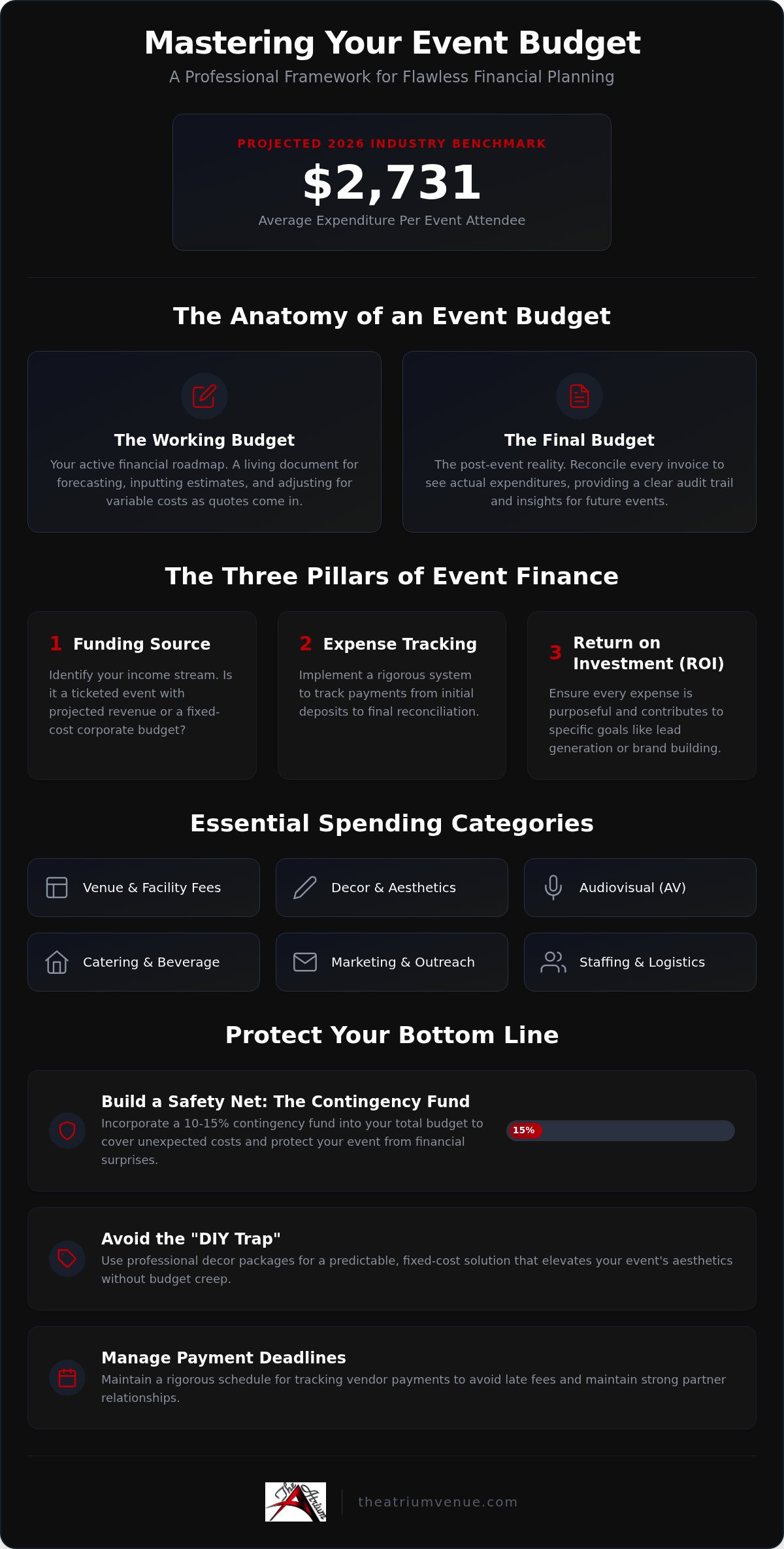
Did you know that the average expenditure per event attendee has climbed to $2,731 in 2026? This staggering figure makes the process of creating an event budget template more critical than ever before. It's completely normal to feel a bit of anxiety when you're first looking at venue costs or trying to estimate decor expenses. Most planners worry about hidden fees or the confusing overlap between fixed and variable costs. We understand that you want your event to be spectacular without facing a financial surprise at the end.
You're in the right place to master the art of financial planning for any occasion. This guide offers a professional framework for creating a reliable budget that works for large conferences or intimate gatherings alike. We'll walk through essential line items and show you how to use versatile spaces and pre-set decor packages to keep your tracking simple. By the time you're finished, you'll have a reusable framework and the confidence to manage your event's finances like a seasoned pro!
Table of Contents
The Fundamentals of Creating an Event Budget Template
Mastering The Fundamentals of Creating an Event Budget Template is the first step toward a stress-free celebration! When you begin creating an event budget template, you're building a reliable roadmap for your entire project. An event budget template is a living document that aligns financial constraints with event goals. It's not just a list of numbers; it's a strategic tool designed for forecasting, real-time tracking, and final reconciliation. By defining your purpose early, you can ensure that every dollar spent contributes to a successful outcome.
Planners often distinguish between the "working budget" and the "final budget." Your working budget is your active space where you input estimates and adjust for variable costs as you gather quotes. The final budget is the post-event reality where you reconcile every invoice to see exactly where your money went. This distinction helps you learn for future events and provides a clear audit trail for stakeholders. It's the difference between what you plan to spend and what you actually invest!
Choosing Your Budgeting Platform
Most pros rely on Excel or Google Sheets for creating an event budget template. Cloud-based spreadsheets are fantastic for collaborator access, allowing your team to update line items from any device! However, version control is vital when multiple planners are involved to avoid accidental deletions or duplicate entries. We recommend setting up basic auto-sum formulas in your category headers. For example, using a simple sum formula ensures that as you update a decor package cost, your total budget adjusts instantly. This automation reduces human error and keeps your financial tracking fast-paced and accurate.
The Three Pillars of Event Finance
Successful events rest on three financial pillars. First, you must identify your funding source. Is this a ticketed event with projected income, or a fixed-cost hosting budget provided by a corporation? Second, you need a rigorous expense tracking system. This covers the entire lifecycle of a payment, from initial deposits on a multi-room facility like the Platinum Room to the final reconciliation. Using a versatile space that accommodates varying capacities helps keep your venue costs stable even if your guest list fluctuates. Third, consider the Return on Investment (ROI). Especially in corporate settings, every expense should justify its place by contributing to a specific goal, like lead generation or employee culture. Organizing your template around these pillars ensures that your spending remains purposeful and transparent from start to finish.
Essential Categories for Your Event Budget Spreadsheet
Organizing your finances requires a keen eye for detail. When creating an event budget template, your spreadsheet categories act as the backbone of your entire plan. You need to account for everything from the grand entrance to the final cleanup. By properly categorizing every expense, you'll find that creating an event budget template becomes a much more manageable task. Start by listing your primary facility fees. If you're hosting a large-scale seminar or a multi-room workshop, you'll need to consider how different rooms interact. Our Event Space Rental Guide provides excellent insights into managing these logistics effectively. For those who need a structured checklist to get started, UCLA's event budget planning guide offers a wonderful starting point for identifying common institutional costs.
Catering and beverage service often represent a significant portion of your spending. You'll need to decide between flat fees for specific services or per-head pricing that scales with your guest list. Don't forget the technical side! Audiovisual requirements for workshops, such as microphones, projectors, and high-speed Wi-Fi, must be distinct line items. Even your marketing efforts, including digital outreach and physical mailers, belong in this section to ensure you're tracking the true cost of attendance. It's all about seeing the full picture before the first guest arrives!
Venue Logistics and Room Specifics
Flow is everything for a successful event! When you utilize a multi-room facility, you can designate specific areas for registration, breakout sessions, and main presentations. This keeps your guests moving and engaged. Always factor in setup and teardown times in your rental agreement. If you don't account for the hours needed to arrange seating or install technical gear, you might face unexpected overtime charges. It's much better to plan for these logistics upfront. We love helping clients visualize how the Platinum, Paragon, and Diamond rooms can work together to create a seamless experience.
Fixed vs. Variable Expenses
Understanding the difference between fixed and variable costs is a game changer for your spreadsheet. Fixed costs remain the same regardless of how many people show up. For example, the rental fee for the Paragon Room is a fixed expense that provides budget stability. On the other hand, variable costs fluctuate based on your final guest count. Per-person catering is typically the most volatile part of any budget. If you're looking to simplify your planning, you might want to explore our professional decor packages, which offer a predictable, fixed-cost solution for your event's aesthetic needs!
Incorporating Decor and Aesthetics into Your Financial Plan
Aesthetics define the mood of your celebration, but they shouldn't define the limit of your stress! When you're creating an event budget template, decor is often where the most significant hidden costs reside. Planners frequently fall into the "DIY Trap," thinking they'll save money by sourcing items themselves. However, once you factor in the fuel for transporting items, the rental of a delivery van, and the hours of labor required for setup and teardown, that "bargain" often disappears. Professional decor packages offer a refreshing alternative by providing a predictable, fixed-cost solution that keeps your financial plan on track. By choosing a package, you eliminate the uncertainty of multiple delivery fees and vendor coordination.
Budgeting for lighting, linens, and floral arrangements requires a strategic approach. These elements transform a functional room into an immersive environment. Using a professional event budget template from Wharton can help you track these proposed costs against the actual outcomes to ensure you stay within your limits. For a deep dive into how these services can simplify your planning, check out The Ultimate Guide to Decor Packages. It's all about making your vision a reality without the financial headaches!
The Value of Bundled Decor Services
Bundling your aesthetic needs into a single package simplifies your spreadsheet immensely. Instead of managing ten different vendor invoices for chairs, table runners, and centerpieces, you have one clear line item. This consolidation reduces the risk of overlooking small fees like damage waivers or late-night pickup surcharges. When you're creating an event budget template, this level of organization is priceless. It also reduces the need for external vendors, which means fewer logistics to manage on the day of the event. You'll find that a comprehensive package often costs less than individual rentals when you account for the time and labor saved.
Visualizing the Space
Large rooms, such as the Platinum Room, require strategic focal points to feel both grand and intimate. Your budget should reflect the specific layout of your chosen venue. Allocating funds for custom themes and branding ensures that the space feels balanced and professionally curated. Whether you're hosting a high-stakes corporate seminar or an elegant gala, the decor must align with the venue's flow. We recommend focusing your spending on high-impact areas like the stage or the entrance to maximize the visual ROI for your guests. This targeted spending ensures your event looks spectacular while keeping your financial goals in sight.
Customizing Your Template for Different Event Types
One size certainly doesn't fit all in event planning! When you're creating an event budget template, you'll find that your priorities shift dramatically based on the occasion. A wedding demands a heavy focus on the guest experience and capturing memories through professional photography. In contrast, corporate events require a business-like efficiency that prioritizes logistics and high-end technical support. For those planning professional gatherings, our Corporate Event Venue Comparison offers a great look at how facility choice impacts your bottom line.
Social gatherings like anniversary parties or reunions fall somewhere in the middle. These events require balancing a warm, intimate atmosphere with the practical capabilities of the venue. Identify these priorities early. This ensures your financial plan reflects the true goals of your celebration. It keeps your spending purposeful and your guests happy!
Large-Scale vs. Intimate Event Budgeting
Scaling your financial framework is a breeze when you have an 8,300-square-foot facility at your disposal. If you're hosting a grand gala, you'll use every inch of the multi-room layout. However, for smaller, polished social events, the Diamond Room provides a perfect setting that feels both exclusive and manageable. Your choice of room directly impacts your "cost per square foot" metric. This is a helpful way to measure value. It ensures you aren't overpaying for unused space and keeps your budget lean.
Corporate Meeting Essentials
When creating an event budget template for business needs, you must account for specialized services. Professional catering packages for business luncheons are a must to keep your attendees energized and focused. Additionally, you should budget for breakout rooms to facilitate small-group discussions. Our Multi-Room Design Case Study illustrates how a versatile facility layout can support these complex logistical needs. It's all about creating an environment where work feels like a pleasure!
Ready to find the perfect space for your next big idea? Explore our versatile event space today!
Refining and Tracking Your Budget for Maximum ROI
Real-time tracking is where the magic happens! Once you've finished the initial phase of creating an event budget template, the real work of financial management begins. You must stay on top of every shift to ensure you maximize your return on investment. We recommend setting up a 10-15% contingency fund right from the start. This buffer handles those unexpected "day-of" expenses like extra ice, last-minute seating adjustments, or emergency technical support without breaking your bank. Planners should update their template weekly to avoid financial drift and keep stakeholders informed of any changes. It's the best way to maintain total control over your event's success!
Managing Vendor Contracts and Payments
Organization is your best friend when you're managing multiple partners. By linking your budget template directly to a digital contract folder, you can verify terms and payment schedules in seconds. This ensures no detail is overlooked. You'll want to track every deposit and final balance due date meticulously to avoid costly late fees. Transparent venue pricing serves as the foundation of an accurate template. When you know exactly what the facility provides, your tracking becomes much more reliable. This transparency allows you to allocate funds elsewhere, like specialized catering or enhanced AV for your breakout rooms. It's all about building a relationship of trust with your providers while keeping your spreadsheet perfectly balanced.
Finalizing the Plan
The finish line is just the beginning for your next project! Reconcile your budget as soon as the final guest count is confirmed to see the true cost per person. This post-event audit allows you to compare your projected costs against what you actually spent. It's a great way to learn and improve! You can then use your 2026 template as a baseline for all your future gatherings, making the process of creating an event budget template even faster next time. If you're looking for ways to further simplify your financial planning, consider Choosing a Venue with Decor Packages. Consolidating your aesthetic costs into one fixed line item is a game changer for long-term budget stability. We're here to help you turn every event into a financial and social triumph!
Take Charge of Your Event's Financial Success
Mastering the art of creating an event budget template is the most effective way to turn your creative vision into a seamless reality. Throughout this guide, we've explored how a strategic framework helps you navigate the complexities of venue logistics and variable catering costs. By choosing fixed-cost solutions like professional decor packages, you can bypass the common "DIY trap" and keep your financial plan stable. Remember that a successful budget is a living document! Updating your numbers weekly and maintaining a healthy contingency fund ensures that you're prepared for any surprise that comes your way.
At our facility, we're dedicated to making your planning process as smooth as possible. Our 8,300-square-foot multi-room venue features the Platinum, Paragon, and Diamond rooms, providing the perfect backdrop for weddings, corporate meetings, and social celebrations. We offer professional decor packages tailored to your specific vision, allowing you to focus on your guests while we handle the aesthetic details. Plan your next event with confidence. Contact The Atrium Venue today! We are eager to partner with you to create an unforgettable and financially sound experience!
Frequently Asked Questions
What is the most important category in an event budget template?
The most important category is almost always the venue and facility fees. This serves as the anchor for your entire financial plan. When creating an event budget template, you must prioritize the cost of your space, as it dictates the capacity and technical capabilities available to you. Whether you book a single room or a multi-room facility, this fixed cost provides the stability needed to calculate your remaining variable expenses accurately.
How much should I set aside for a contingency fund?
You should set aside between 10% and 15% of your total budget for a contingency fund. This specialized line item protects you from unexpected costs that often arise on the day of the event. These might include last-minute equipment rentals or emergency staffing needs. By planning for these surprises upfront, you ensure that your event remains financially sound even when minor logistical shifts occur during the execution phase.
Can I use a free template for a large corporate event?
You can certainly start with a free template, but it must be heavily customized for a large corporate event. Standard free sheets often lack the complexity required for multi-room logistics or professional audiovisual needs. When creating an event budget template for business use, ensure it includes categories for breakout sessions and high-end catering. A professional framework is essential to demonstrate ROI and satisfy the requirements of your finance department.
What is the difference between fixed and variable costs in event planning?
Fixed costs remain constant regardless of your attendance, while variable costs fluctuate based on the number of guests. For example, renting a specific room is a fixed cost that provides budget stability. In contrast, catering and beverage services are variable costs that change as your guest list grows or shrinks. Distinguishing between these two types of expenses is vital for accurate forecasting and avoiding financial surprises late in the planning process.
How do decor packages affect my overall event budget?
Decor packages simplify your budget by replacing dozens of individual vendor invoices with one predictable, fixed-cost line item. This eliminates the "DIY trap" where hidden costs for transport and labor often balloon beyond your original estimates. By choosing a professional package, you gain aesthetic consistency and financial clarity. This streamlined approach allows you to focus your resources on other high-impact areas of the guest experience without worrying about mounting rental fees.
Should I include venue insurance in my budget template?
Yes, including venue liability insurance is a critical step for risk management. For 2026 events, a standard $1 million per occurrence policy typically costs between $75 and $550 depending on the event type. Adding this to your spreadsheet ensures you're prepared for any vendor requirements or facility rules. It's a small investment that provides immense peace of mind, protecting your budget from potential claims or accidents during the celebration.
How often should I update my event budget spreadsheet?
You should update your spreadsheet at least once a week to maintain total financial control. Weekly updates prevent "financial drift" where small, unrecorded expenses slowly eat away at your contingency fund. This habit keeps you informed of upcoming payment deadlines and helps you monitor your spending against your original projections. Regular tracking ensures that you can make informed adjustments in real-time, keeping your event on track for a successful and profitable outcome.
What is the best way to track guest-related expenses?
The best way to track guest-related expenses is through a clear "per-head" calculation in your variable costs section. This allows your budget to adjust automatically as guest counts are updated. We recommend reconciling these figures immediately after the final count is confirmed. This methodical approach ensures that your catering and beverage totals remain accurate. It also provides a valuable baseline for calculating the final cost per attendee when your event concludes.


Comments