

How to Choose a Venue for Networking Events That Gets People Talking
What makes the best venue for networking events isn’t necessarily the most impressive room. It’s a space that makes it easy for guests to start talking. A polished setting can set the tone, but the layout and flow influence whether people mingle naturally or stay with familiar groups.
If you’re planning a networking event, you may be wondering how to avoid a room that feels crowded, empty, or awkward to move through. You also need to know who handles setup and other logistics, and how to fit presentations or refreshments into the schedule without bringing conversation to a halt.
The right venue can support comfortable connections from arrival to the final conversation. This guide explains how to assess room layout, guest flow, accessibility, and planning details before you book. You’ll also learn how to arrange the space and schedule so guests have clear opportunities to meet and talk.
Table of Contents
What Makes a Venue for Networking Events Work?
A networking-friendly venue makes conversation comfortable, movement easy, and the event’s purpose clear. It does more than hold the expected number of guests. Its layout, atmosphere, and setup can influence whether attendees meet new people or settle into familiar groups.
A room with one obvious gathering point may draw everyone into a single cluster, while separated areas can make it harder for guests to cross paths. Consider how the space will work in practice: Can people hear one another comfortably? Are there natural places to pause and talk? Can guests circulate without squeezing past a presentation or blocking an entrance? These questions make venue selection part of the event management process, rather than a decision based on appearance alone.
Start with the event's purpose and attendee experience
First, define what attendees should get from the gathering. Is the main aim to build professional relationships, share expertise, or introduce an organization? The answer affects the room setup and event schedule. A relationship-building mixer needs room for informal conversation, while an expertise-sharing event may need focused listening as well as time to connect.
Think about who will attend and what a successful interaction looks like for them. It might be a first introduction, an exchange of ideas, or a follow-up conversation. Then consider comfort: the conversation level should suit the format, and guests should have opportunities to meet people beyond their existing colleagues. A welcoming environment helps, but the layout should make it easy to start those interactions.
Match the venue to the networking format
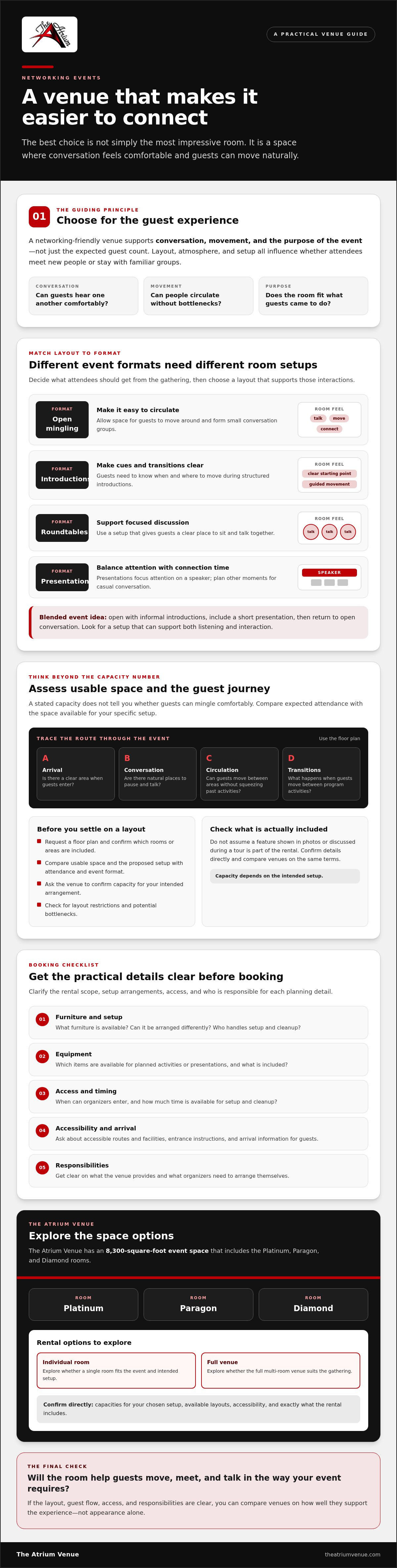
Open mingling, structured introductions, roundtables, and presentation-led events place different demands on a room. Open mingling benefits from space to circulate and form small groups. Structured introductions need clear cues for when and where guests move. Roundtables support focused discussion, while presentations direct attention toward a speaker and reduce casual conversation during that portion of the program.
Many professional gatherings combine formats. An event might open with informal introductions, include a short presentation, then return to open conversation. Look for a setup that can support both attentive listening and easy interaction, or ask what room arrangements are possible. Don’t assume one layout suits every audience. The right choice depends on the event’s purpose, attendees, and balance between planned content and unstructured conversation.
Which Venue Features Help Networking Guests Connect?
A venue may advertise a generous capacity, but the number alone won’t tell you whether guests can mingle comfortably. Usable layout matters alongside stated capacity because it determines how easily attendees can move, gather, and talk without crowding or interrupting activities. Assess the room as guests will experience it, from arrival through each part of the program.
Evaluate capacity, layout, and guest movement
Request a floor plan and confirm which rooms or areas are included in the rental. Compare the usable space and proposed setup with your expected attendance and event format. A layout that works for seated discussions may feel restrictive for open mingling, even if the stated capacity seems sufficient.
Trace the guest journey on the plan. Check whether entrances lead into a clear arrival area, whether attendees can circulate between conversation spots, and whether seating or planned activities could create bottlenecks. Picture what happens when guests arrive at once or move between program activities. Ask the venue to confirm capacity for your intended setup and identify any layout restrictions before you finalize plans.
Confirm practical details before comparing venues
Don’t assume a feature shown in photos or discussed during a tour is included in the rental. Confirm these details directly:
Furniture and setup: Ask what furniture is available, whether different arrangements are possible, and who handles setup and cleanup.
Equipment: Check which items, if any, are available for planned activities or presentations, and verify what is included.
Access and timing: Clarify when organizers can enter, how much time is available for setup and cleanup, and whether venue rules affect the schedule.
Accessibility and arrival: Ask about accessible routes and facilities, entrance instructions, and arrival information you can share with guests.
Responsibilities: Get clear on what the venue provides and what organizers need to arrange themselves.
Keep the answers together so you can compare venues on the same terms. The Atrium Venue’s 8,300-square-foot event space includes the Platinum, Paragon, and Diamond rooms, with individual-room or full-venue rental options to explore. Ask about capacity, available layouts, accessibility, and rental details for your event, or review The Atrium Venue’s event space as one option to consider.
How Should You Compare Layouts for Different Networking Events?
Choose a layout based on the agenda, guest count, and kind of interaction you want to encourage. A venue for networking events should support how people will use the space, whether they’re meeting informally, taking part in guided discussions, or listening to a speaker. Use this comparison to shortlist suitable arrangements, then confirm what each venue can accommodate.
Choose a format that fits the event agenda
Start with the run of show. If informal introductions are the priority, an open arrangement can make it easier for guests to join and leave conversations. Seated groups work well for roundtables or guided exchanges, where everyone needs a place to participate. For a mixed agenda, plan how the room will shift between presentation and conversation. Allow a clear transition from listening to mingling rather than expecting guests to socialize while their attention is directed at a speaker.
Use room configuration to support different activities
One room can keep the event feeling connected and simplify movement between activities. Separate rooms may suit a program with breakout conversations alongside a main gathering, or help distinguish focused discussion from informal mingling. They also introduce transitions, so consider how attendees will find each activity and move between spaces.
Compare options against your guest list and schedule, not just the number of rooms. A larger event may benefit from distinct areas, while a smaller gathering may feel more cohesive in one room. Ask which rooms can be rented and what configurations are available. The Atrium Venue offers individual rooms or a full multi-room rental to explore, which may help you assess whether separate spaces suit your event flow.
What Should You Plan Before Booking a Networking Venue?
A clear plan helps you compare venues fairly and identify unanswered questions before you commit. Before booking a venue for networking events, prepare a brief, map the guest experience, and get key arrangements confirmed in writing. Use this checklist to keep the process organized.
Build a clear event brief before contacting venues
Set out the event’s purpose, who will attend, your estimated guest count, and the kind of interaction you want to encourage. Include a draft schedule and preferred format, such as open mingling, guided introductions, or a presentation followed by conversation. Separate must-haves from preferences so you can compare options against what matters most.
Confirm responsibilities, setup, and event flow
Draft a run of show that gives each activity enough time, including unhurried periods for guests to talk. A site visit can help you assess whether the proposed setup fits that plan and whether the arrival, activity, and conversation areas make sense for your group.
Use this numbered checklist as you assess each option:
1. Define the brief: Record the objective, audience, estimated attendance, schedule, preferred format, and essential requirements.
2. Ask the right questions: Confirm date availability, rental scope, included rooms or areas, access times, venue policies, and any restrictions that affect your plans.
3. Visit the space: Review the proposed layout in person, consider the guest journey, and ask whether the arrangement suits your intended activities.
4. Clarify responsibilities: Confirm who handles furniture arrangements, setup, cleanup, and day-of coordination. Ask what equipment or other items are available, and verify each detail rather than assuming it is included.
5. Confirm the agreement: Request written confirmation of the arrangements, timing, responsibilities, rental scope, and any additional requirements.
Include atmosphere in the brief, too. Decide what visual impression fits your organization and event, then ask what decor options are available and what they include. If a coordinated look is part of your plan, review professional event decor packages as one way to explore the possibilities.
To assess a venue against your checklist, explore event space options and confirm the details that matter for your event directly.
Could The Atrium Venue Suit Your Networking Event?
The Atrium Venue offers an 8,300-square-foot event facility with three rooms: Platinum, Paragon, and Diamond. Organizers can ask about renting an individual room or the full multi-room venue, then compare those options with their guest estimate, event schedule, and preferred networking format. The best fit depends on the details of your gathering, so confirm how each rental option could work for your plans.
Explore room and full-venue rental options
An individual room may be worth discussing for a gathering with one main activity, while the full venue may be an option for an event with distinct activities or planned transitions between spaces. These are possibilities to confirm with the venue, not assumptions about how any room is configured. Share whether your event centers on open conversation, structured introductions, a presentation, or a mix of formats.
Ask about room capacities for your intended setup, along with availability and which areas are included in each rental option. Discuss your attendance estimate and preferred layout directly. This helps you assess whether the available space can support your guest flow and program without relying on unverified room details.
Take the next step with a clear event brief
Before you reach out, gather the key details that will help the venue respond to your questions:
Event date and attendance: Share your preferred date and estimated number of guests.
Schedule and format: Explain the planned activities and when you expect guests to arrive, mingle, or take part in presentations.
Room and rental needs: Ask which rooms may be available, what the rental includes, and whether your preferred configuration is possible.
Atmosphere: If you want a cohesive visual feel, ask about professional decor packages and confirm what options and inclusions are available.
Requirements: Discuss setup, access, accessibility, and any other details that matter for your attendees.
These questions can help you decide whether The Atrium Venue is the right venue for networking events for your goals, rather than choosing on room size alone. Confirm availability, room capacities, rental inclusions, and event requirements directly before making plans. Have an event brief ready? Discuss your networking event with The Atrium Venue.
Choose a Space That Helps Conversations Grow
A strong venue for networking events does more than fit your guest list. Its layout should make it comfortable to move around, start conversations, and take part in planned activities. Match the setup to your agenda, then confirm room capacity, rental details, access, and responsibilities directly with the venue.
The Atrium Venue offers an 8,300-square-foot multi-room facility with the Platinum, Paragon, and Diamond rooms. You can ask about renting an individual room or the full venue, and explore professional decor packages for a cohesive event atmosphere. Confirm availability, capacities, inclusions, and how your preferred layout could work before making a decision.
Have your event date, estimated attendance, schedule, and networking format ready. Then discuss your networking event with The Atrium Venue to explore whether the space and rental options fit your plans. With a thoughtful layout and clear arrangements, you’ll be well placed to create a welcoming event where genuine connections can begin.
Frequently Asked Questions
What should I look for in a venue for networking events?
Look for a space that fits your event format and lets guests converse comfortably, move between gathering areas, and take part in planned activities. Consider how attendees will enter, where they can talk, and whether presentations or seated discussions are part of the program. Ask for a floor plan, confirm the usable areas and room capacity for your intended setup, and check accessibility, rental details, and organizer responsibilities.
How much space do I need for a networking event?
The space you need depends on expected attendance, room layout, and what guests will do during the event. Open mingling, seated conversations, and presentation-led programs use space differently, so don’t rely on a headline capacity alone. Share your guest estimate and proposed format with the venue, then confirm the room’s capacity for that specific arrangement. Ask whether all areas shown on a floor plan are included in the rental.
How do I arrange a room for a networking event?
Arrange the room to match the agenda and make it easy for guests to join conversations. For informal mingling, leave clear routes between gathering areas. For guided discussions, arrange seating so participants can face one another. If there’s a presentation, define an audience area and plan how the space will transition back to conversation. Confirm furniture and setup responsibilities with the venue before finalizing the arrangement.
Is a multi-room venue a good choice for networking?
A multi-room venue may suit an event with distinct activities, such as a main gathering and smaller breakout discussions. Separate spaces can help distinguish parts of the program, though organizers should consider how guests will find and move between them. For a gathering intended to keep everyone together, one room may be a better fit. Ask about room availability, rental options, capacities, and configuration before deciding.
What questions should I ask before booking a networking venue?
Ask which rooms and areas are included, what capacity applies to your planned layout, and whether your preferred setup is possible. Confirm availability, access times, furniture, equipment, setup and cleanup responsibilities, accessibility information, and any venue rules that may affect your event. Request written confirmation of rental details and agreed arrangements. A site visit and floor plan can help you check that the space supports your schedule and guest flow.
How can a venue help guests network more effectively?
A venue can support networking with a layout that makes movement and conversation feel natural, clear paths between gathering areas, and suitable space for planned activities. The setting can also help guests understand where to go during different parts of the program. These features don’t guarantee meaningful connections, so pair them with a schedule that allows time to mingle and arrangements suited to your audience.
Can I rent one room instead of an entire networking venue?
Yes. The Atrium Venue offers individual-room rentals as well as the option to rent its full multi-room facility. Its 8,300-square-foot event space includes the Platinum, Paragon, and Diamond rooms. Ask which room is available for your event date, what its capacity is for your planned setup, and what the rental includes. Discuss your guest estimate and format directly so you can compare options against your event needs.


Comments