

Hidden Costs of Renting a Venue: The Ultimate Budgeting Checklist for 2026
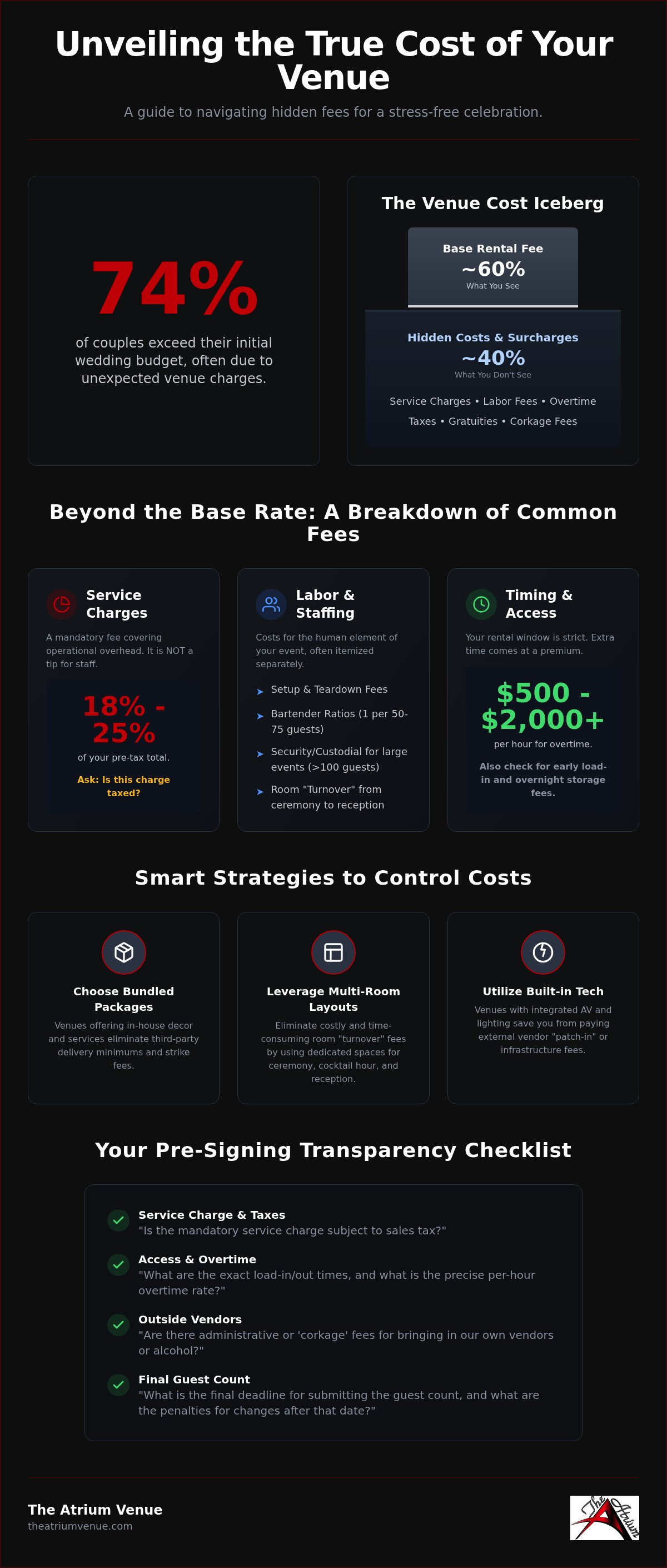
Did you know that 74% of couples end up exceeding their initial wedding budget? It's a startling figure, but much of that overage stems from the hidden costs of renting a venue that weren't clearly explained during the initial tour. From mandatory service charges that range between 18% and 25% to unexpected labor fees for setup, these small details can quickly turn a celebration into a financial headache.
You deserve to feel confident and excited about your big day, not anxious about the final invoice. We understand the frustration of confusing 'service fees' with 'gratuities' or the stress of underestimating decor costs. Our goal is to provide you with total clarity so you can plan with absolute peace of mind. This guide reveals the overlooked expenses that often inflate budgets and shows you how to secure a truly transparent agreement. We'll provide a clear list of questions for venue managers and explain how bundling services like decor and space can keep your costs predictable and your planning process energetic and orderly!
Table of Contents
The Rental Fee vs. The Total Cost: Defining the Baseline
Many planners are surprised to learn that the base rental rate often represents only about 60% of the total venue expenditure. It's an easy trap to fall into when you're looking at a beautiful space and see a flat fee. You might assume it covers the essentials, but the reality is more complex. Total Event Cost is the sum of space, service, and infrastructure.
When you compare options, pay close attention to the distinction between "dry hire" and facility rentals that include amenities. A dry hire might seem like a bargain at first. However, you're essentially renting four walls. You'll need to source every fork, chair, and light fixture yourself, which often leads to higher logistics costs. In contrast, a facility rental that includes built-in amenities provides a more predictable baseline for your budget. Understanding these hidden costs of renting a venue early on ensures you won't face a budget crisis later.
Pricing shifts also go beyond just the day of the week. While Saturdays are traditionally peak times, seasonal demand or holiday weekends can also trigger higher rates. Ask your venue manager about off-peak windows that might not be immediately obvious. This proactive approach helps you find the best value for your specific date.
What Does 'Included' Actually Mean?
Don't assume "tables and chairs" means the specific style you want for your 2026 aesthetic. Standard amenities usually cover basic rounds and banquet chairs. If you require a room "turnover" where the space transitions from a ceremony to a reception, ask if there's a specific fee for that labor. Transitioning a single room can be costly and time-consuming. Using a multi-room facility design can actually save you money by eliminating these transition fees. Also, verify parking and accessibility. Are you paying for a dedicated lot, or is the room fee just for the indoor square footage?
Facility Access and Load-In Windows
Timing is everything in event planning! If your vendors need early access for a complex setup, you might face a high early load-in fee. Most contracts specify a strict window for arrival and departure. Overtime fees are equally significant. If your celebration runs just 30 minutes late, you could be charged for a full hour of staff time. These charges can range from $500 to $2,000 per hour depending on the venue. Additionally, check for storage fees if you plan to have items delivered the day before your event. Many venues charge for the square footage used to house your decor or equipment overnight.
Service Fees, Gratuities, and Labor: The 'Small Print' Checklist
Understanding the difference between a service charge and a tip is one of the most important steps in managing the hidden costs of renting a venue. While a gratuity is a voluntary expression of thanks for great service, the service charge is almost always a mandatory addition to your contract. This fee isn't just a "tip" for the waitstaff. It covers the logistical backbone of your event, from the administrative time spent planning your layout to the utility costs of keeping the lights on. Many planners find that these costs are where their budget starts to drift if they aren't careful.
Labor fees for setup and teardown are another area where "all-inclusive" can be a relative term. Even if a venue provides tables and chairs, they might charge a specific labor fee to move them into place or remove them after the party ends. For events with over 100 guests, expect additional custodial and security requirements. Large groups generate more waste and require more oversight, especially if you're hosting an open bar. Administrative fees may also apply if you choose to bring in outside vendors. These fees cover the time the venue staff spends coordinating with your chosen caterer or DJ. Additionally, "corkage" fees can range from $10 to $40 per bottle if you provide your own wine or champagne. These small line items add up quickly!
Breaking Down the Service Charge
Nationally, service charges typically range from 18% to 25%. It's crucial to ask if this charge is taxed. In many jurisdictions, because the service charge is mandatory and kept by the business, it's treated as taxable revenue rather than a non-taxable tip. This can add a surprising 7% to 10% to your final bill. Venues use these funds to cover operational overhead, ensuring every detail of your event runs smoothly. Always look for a line item that clearly distinguishes between the service fee and any voluntary gratuity you might want to add later.
Mandatory Staffing Requirements
Staffing isn't just about waitstaff. Most venues enforce specific bartender-to-guest ratios, often one bartender per 50 to 75 guests, to prevent long lines and ensure safety. You might also encounter "pouring fees" if you bring your own alcohol. For formal social gatherings, don't overlook coat check or bathroom attendant fees. Security personnel are also frequently required for events with high-profile guests or open bars. These professionals ensure a safe environment for everyone. If you're looking for a partner who prioritizes budget clarity, exploring professional event space options with transparent staffing models is a great first step.
The Decor Gap: Why Professional Packages Save Money
Many hosts believe that sourcing their own centerpieces and linens is a savvy way to cut expenses. However, the logistical gap between a bare room and a finished event is where the hidden costs of renting a venue truly multiply. When you hire third-party rental companies, you often face steep delivery minimums and rigid drop-off schedules that might not align with your venue's access windows. Managing these moving parts can be exhausting! By the time you account for transportation, your own time, and the physical labor involved, that "DIY" savings often disappears entirely.
Professional decor packages eliminate the need to coordinate multiple outside vendors. Transforming a massive 8,300-square-foot space requires a significant volume of materials to feel cohesive and inviting. If you're managing individual rentals, you're responsible for every single item's arrival and return. Choosing a bundled approach allows you to focus on your guests while the venue's experienced team handles the heavy lifting. It's a proactive way to keep your budget predictable and your planning process orderly.
Linen and Tableware Surprises
Small choices in aesthetics carry surprisingly large price tags. For instance, floor-length linens provide a polished, elegant look, but they cost significantly more than standard lap-length options. You should also watch for glassware and flatware "replacement fees" in your contracts. If a few champagne flutes break during your toast, those individual charges can add up quickly. Additionally, specialty lighting like uplighting can impact the venue's power grid. Some facilities charge extra for increased electricity usage or require a specific technician to monitor the setup to prevent tripped breakers.
The Labor of Aesthetics
The most overlooked expense in the decor category is the "Strike Fee." This is the premium vendors charge to clean up and remove their items at 1:00 AM once the party ends. If you're handling decor yourself, you're the one stuck cleaning while your guests head home! Choosing in-house decor services like those at The Atrium Venue reduces this coordination stress. Everything is handled by a team that already knows the facility inside and out. This also helps you avoid the "damage deposit" trap. Since the venue's own staff manages the setup and teardown of their vetted inventory, you aren't held liable for the logistical mishaps of outside delivery teams.
Multi-Room Logistics and Technical Infrastructure
Managing guest flow between different areas often reveals the hidden costs of renting a venue that many planners overlook. When you choose a multi-room event venue rental, you gain incredible flexibility, but you must plan for the technical and logistical infrastructure needed to support those spaces. One common pitfall is paying for "dead space." This occurs when you rent a room far larger than your guest list requires, leading to unnecessary square footage costs. Utilizing distinct rooms allows for a seamless transition from a presentation to a cocktail hour without the expensive turnover fees mentioned earlier.
Audiovisual requirements can also introduce unexpected line items. Identifying these hidden costs of renting a venue early ensures your technical needs don't break the bank. Many venues charge an AV "patch-in" fee. This is a charge for the right to connect your own DJ or presenter equipment into the venue's built-in sound system. While it might seem like a simple plug-and-play scenario, venues often require this fee to cover the maintenance of their speakers and wiring. For corporate workshops or high-energy receptions, power requirements are another factor. Standard wall outlets might not support large lighting rigs or heavy-duty catering equipment, potentially leading to additional charges for dedicated power drops.
Audiovisual and Connectivity Costs
Connectivity is a necessity. For corporate seminar room rentals, verify the available WiFi bandwidth tiers. A basic connection might be free, but a dedicated high-speed line for live streaming or 200 simultaneous users often incurs a premium. Ask about microphone and projector rental fees versus "bring your own device" policies. Even if you bring your own hardware, the venue might require you to hire dedicated tech support labor for the duration of the event to ensure no technical glitches disrupt your schedule.
Managing the Paragon, Platinum, and Diamond Rooms
Choosing the right room size is the most proactive way to manage your budget. Utilizing the Diamond room for an intimate gathering or the Platinum room for a large-scale gala prevents overspending on unneeded space. When transitioning guests between these areas, consider if you need extra signage or dedicated staff to guide the flow. Climate control is another logistical detail. A room that feels perfect for 50 people during a quiet workshop will feel much warmer during a high-energy reception with 200 guests. Ensure your venue manager can adjust lighting and temperature settings quickly as the event phases change.
Ready to see how a well-designed space can simplify your planning? Explore our versatile room layouts to find the perfect fit for your next event.
The Venue Contract Checklist: Final Steps to Transparency
The contract is your last line of defense against the hidden costs of renting a venue. Reviewing every clause carefully ensures that your vision aligns perfectly with the venue's operational realities. One of the most critical dates in your planning calendar is the "Final Guest Count" deadline. Most venues require this number 14 to 30 days before the event. If your guest list shrinks after this date, you'll still be charged for those empty seats. It's a common way budgets inflate unnecessarily!
You should also pay close attention to the Force Majeure and cancellation clauses. These sections protect both you and the venue in case of unforeseeable circumstances. Understanding these terms helps you avoid steep penalties if you need to reschedule. At our facility, we prioritize clear communication to ensure you feel confident and supported from the first tour to the final toast. We believe that a successful partnership is built on total honesty regarding every line item.
Questions for Your Venue Manager
Before you sign, ask these specific questions to uncover any remaining hidden costs of renting a venue:
Does the venue have a preferred vendor list, and is there a fee for using "off-list" vendors? Some facilities charge $500 or more to vet outside caterers.
Are there any pending renovations or changes scheduled for the space before my event date? You don't want construction surprises on your big day!
What is the exact "out-the-door" price, including all taxes, service fees, and labor charges?
Securing Your Date and Deposit
Know exactly where your money goes when you place a deposit. Verify if the initial payment is non-refundable or if it's applicable toward your final balance. You'll also want to establish a clear payment schedule to avoid late fees on the final balance. Many venues now require a "Special Event Liability" policy. This insurance typically provides $1 million in coverage and protects you from financial responsibility for accidental damages or injuries during the event. It's a small upfront cost that offers massive peace of mind.
The final walkthrough is your opportunity to identify last-minute needs before they become unexpected fees. Use this time to confirm the placement of every table and the timing of every vendor arrival. We maintain transparency through our versatile event rooms and clear package pricing, ensuring you have a predictable budget. By following this checklist, you'll transform the planning process from a stressful chore into an energetic and orderly experience!
Plan Your 2026 Event with Confidence
Planning a successful event starts with absolute financial clarity. You now have the tools to identify the hidden costs of renting a venue, from complex service charges to late-night strike fees. By choosing a partner that prioritizes transparency, you can focus on making memories instead of managing math. Remember that bundled decor packages and multi-room layouts aren't just about convenience; they're strategic choices that keep your budget predictable and your stress levels low.
We're here to help you navigate every detail of your celebration! Our 8,300 square feet of customizable multi-room space is designed to adapt to your specific needs. With award-winning decor packages and a commitment to no-surprise professional event management, we ensure your planning process remains energetic and orderly. Ready to see the difference transparency makes? Book a Tour of The Atrium Venue and Get a Transparent Quote today. We can't wait to help you bring your vision to life!
Frequently Asked Questions
What is the most common hidden cost in venue rentals?
The mandatory service charge is the most frequent surprise found in the fine print. Nationally, these fees range from 18% to 25% of your total bill. While you might assume your base rental covers everything, this charge supports the facility's administrative and operational backbone. It's one of the primary hidden costs of renting a venue that planners overlook. Always ask for an itemized estimate that includes these percentages before signing any contract.
Is a service charge the same as a tip for the staff?
A service charge is not a gratuity. While a tip is a voluntary gift for excellent waitstaff, the service charge is a mandatory fee that venues use to cover overhead, management, and facility maintenance. In many states, this charge is also taxable, adding another layer to your final invoice. Clarifying this distinction early helps you decide if you want to budget for additional voluntary tips for the individuals serving your guests.
Do venue decor packages really save money compared to DIY?
Professional decor packages often provide significant savings by eliminating third-party logistics. When you source items yourself, you face delivery minimums, transportation costs, and late-night labor fees for teardown. Bundled services at a professional facility streamline the process and keep your pricing predictable. By using in-house inventory, you avoid the coordination stress and high markups associated with managing multiple outside vendors for linens, lighting, and centerpieces.
What happens if my event guest count changes at the last minute?
Most contracts include a "Final Guest Count" deadline, typically 14 to 30 days before your date. If your attendance drops after this cutoff, you're still financially responsible for the higher number. Venues order supplies and schedule labor based on that confirmed count. To protect your budget, send your RSVPs early and keep a close eye on the calendar so you can provide an accurate update before the deadline passes.
Are audiovisual equipment costs usually included in corporate venue rentals?
Audiovisual costs are frequently listed as separate line items rather than part of the base rent. You might encounter "patch-in" fees for using the venue's built-in sound system or rental charges for projectors and microphones. Even if you bring your own device, some facilities require you to pay for on-site tech support labor. Always request a technical equipment price list to ensure your corporate presentation or reception music stays within budget.
What is a 'strike fee' and why do venues charge it?
A strike fee is a labor charge for the teardown and removal of event materials immediately after your celebration ends. Vendors often charge a premium for "striking" a set at 1:00 AM or on weekends. This is one of the hidden costs of renting a venue that DIY planners often forget. Choosing a venue with integrated decor services can help you bypass these individual vendor fees, as the facility's team manages the transition internally.
Do I need to pay for insurance when renting a professional event space?
Most professional event spaces require you to carry a "Special Event Liability" policy. This insurance typically provides $1 million in coverage for accidental property damage or bodily injury during your event. While it's an additional expense, it protects you from massive financial risks. Some venues also require you to name them as an "additionally insured" party on the policy. It's a standard industry requirement that ensures everyone remains protected during the festivities.
How can I avoid overtime fees if my event runs late?
Avoiding overtime fees requires proactive scheduling and a realistic timeline. Most venues charge between $500 and $2,000 per hour if you exceed your contracted window. To stay on track, build a 30-minute buffer into your itinerary for guest departures. Utilizing a multi-room facility design can also help! Having dedicated spaces for different event phases prevents the delays often caused by flipping a single room from a ceremony to a reception.


Comments