

How to Choose an Event Venue: A Step-by-Step Selection Guide
The venue you select is more than just a backdrop; it's the foundation of your entire celebration! Whether you're planning a wedding or a corporate gala, your choice often accounts for a significant portion of your budget and dictates the entire flow of the night. Learning how to choose an event venue that balances aesthetic beauty with practical logistics is the secret to a stress-free planning process. We know that the fear of booking a space that feels cramped or dealing with a confusing web of outside vendors can feel overwhelming. It's completely normal to feel anxious about hidden costs while you are trying to create a high-end experience for your guests.
You deserve to feel confident and excited about your selection. This guide provides a clear, step-by-step selection process to help you find a space that offers both versatile layouts and professional decor packages. We'll explore the essential criteria for venue tours, compare the value of all-inclusive options versus DIY setups, and provide a checklist to ensure your guest count fits perfectly. From understanding the benefits of multi-room facilities to mastering the logistics of event flow, you'll gain the tools needed to host a truly memorable occasion!
Table of Contents
Defining Your Event Vision and Guest Capacity
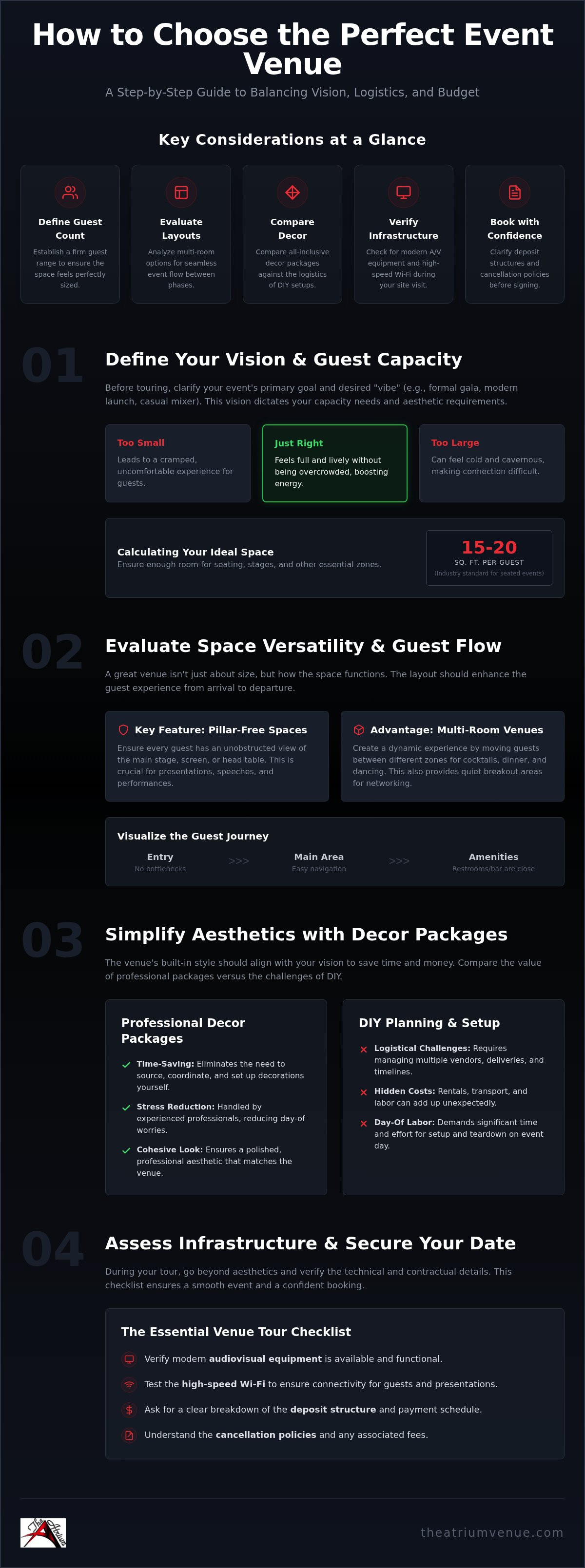
Before you start touring locations, you need a crystal-clear picture of what your gathering is meant to achieve. Every celebration has a primary goal, whether it's a milestone birthday, a corporate networking session, or an educational workshop. Understanding this objective is the first step in how to choose an event venue that supports your mission rather than working against it. You also need to determine the "vibe" of the occasion. Is it a formal black-tie affair, a sleek modern product launch, or a casual social mixer? The venue's existing architecture should naturally align with these aesthetic goals to save you time and money on extra decor.
Establishing a realistic guest count range early on is just as vital. Booking a space that's too small leads to a cramped, uncomfortable experience for your guests. Conversely, a room that's too large can feel cold and cavernous, making it difficult to maintain energy and connection. Aim for a venue that offers flexibility so your event feels full and lively without being overcrowded.
Calculating Your Ideal Square Footage
Spatial planning is a science. For seated events like dinners or seminars, the industry standard is typically 15 to 20 square feet per guest. This ensures everyone has enough elbow room to enjoy their meal or take notes comfortably. However, you must also account for "dead space" that isn't used for seating. This includes areas for buffet tables, stages for speakers, and the all-important dance floor. An 8,300-square-foot facility offers a fantastic balance for mid-to-large gatherings, providing enough room for these essential zones without sacrificing the feeling of intimacy.
Aligning Space with Event Type
The best venues are those that can adapt to different professional and social needs. In the field of event management, versatility is key. A corporate seminar requires a room that reflects a focused, professional tone with clear sightlines for presentations. A wedding reception, on the other hand, needs a space with inherent charm and warmth. Look for venues with distinct rooms, such as the Platinum, Paragon, or Diamond rooms, which can be tailored to specific capacities. This allows you to choose a space that matches the scale of your event perfectly. Versatile rooms are particularly valuable if you need to transition from a structured daytime meeting to an elegant evening gala in the same location.
Evaluating Space Versatility and Layout Flow
Selecting a venue isn't just about the square footage; it's about how that space is used. When you're learning how to choose an event venue, the floor plan is your most important tool. Look for pillar-free spaces. These ensure that every guest has an unobstructed view of the stage or the couple. Nothing kills the energy of a presentation or a first dance faster than a giant concrete pole blocking the view. If you have a smaller guest list, ask how the space can be partitioned to keep the atmosphere intimate rather than empty. Spatial logic is vital for a successful gathering!
The Advantages of a Multi-Room Venue
A single large room can sometimes feel static. Using a multi-room venue allows you to separate different event phases seamlessly. For instance, you might use the Platinum room for an elegant cocktail hour and then move guests into the Paragon room for the main dinner. This creates a "reveal" moment that keeps people excited and engaged. It also provides quiet breakout areas. Some guests may want to step away from the loud music or a crowded presentation to have a private conversation. Having dedicated rooms makes this possible without them leaving the event entirely.
Visualizing Guest Movement
Think about the journey your guests will take from the moment they walk through the door. Entryways must be wide enough to prevent bottlenecks during registration or coat check. Once inside, check the proximity of restrooms and bars to the main seating area. If guests have to trek across the entire 8,300-square-foot facility just for a drink, they'll spend more time walking than networking. Understanding the logistics of guest movement is a core part of how to choose an event venue that feels effortless. For more detailed insights, read our guide on maximizing flow in a multi-room event venue.
Choosing a layout that works for your specific needs is much easier when you have a versatile space to work with. If you're ready to see how a professional layout can elevate your next gathering, consider exploring our available event spaces to find the perfect fit. Our team is eager to help you map out a floor plan that keeps your guests comfortable and your program on track!
Simplifying Aesthetics with Professional Decor Packages
The visual atmosphere of your event sets the tone the moment your guests arrive! When you're researching how to choose an event venue, it's easy to focus solely on the walls and floors, but the decor is what brings the space to life. Many hosts feel torn between the creative control of DIY projects and the convenience of professional packages. While DIY might seem like a way to save money, it often introduces hidden costs in time, transportation, and stress. Choosing a venue that offers integrated decor allows you to focus on your guests instead of wrestling with table runners.
In-House Packages vs. Independent Vendors
Think about the logistics of your big day. Do you want to manage five different decor vendors, or would you prefer one dedicated venue coordinator? Working with an in-house team streamlines the entire process! These packages often provide significantly better value because the venue already owns an extensive inventory of high-quality items. You won't have to worry about delivery fees, late arrivals, or setup delays. Plus, the venue staff knows exactly how to highlight the room's best features. You can find more details on transforming your event with decor packages to see how these options simplify your planning.
Achieving a Cohesive Design
Professional decor ensures a polished, high-end finish that is difficult to replicate on your own. Lighting is one of the most powerful tools in a designer's arsenal; it can instantly shift a room from a bright, professional seminar to a warm, romantic reception. When you visit a space, assess the quality of the following items:
Linens and Drapery: Look for high-quality fabrics that enhance the room's natural features.
Lighting: Ensure they offer adjustable uplighting to match your mood or brand colors.
Centerpieces: Check for a variety of styles that fit modern, formal, or casual themes.
Always ask if the venue handles the setup and teardown as part of the package! This service is a lifesaver, as it means you aren't the one staying late to pack up boxes after a long celebration. Don't forget to inquire about customization. Whether you need specific brand colors for a corporate launch or a unique theme for a wedding, a professional team can adapt their inventory to fit your vision. By opting for professional packages, you ensure every element works together for a truly cohesive look. This is a vital step in how to choose an event venue that provides a stress-free experience from start to finish.
Assessing Essential Amenities and Infrastructure
A beautiful room is just the beginning. To truly understand how to choose an event venue, you must look beneath the surface at the infrastructure that keeps the night running smoothly. Even the most elegant decor can't compensate for a failing sound system or a room that is uncomfortably hot. You need a space that is as functional as it is fashionable! High-quality amenities are the backbone of a successful gathering, ensuring that your program proceeds without technical glitches or guest discomfort.
Technical Requirements for Modern Events
Modern events rely heavily on technology to engage and inform. While some competitors focus entirely on event software, your physical hardware needs are just as vital. Verify that the venue offers a dedicated, professional-grade sound system. You need clear audio for both emotional wedding toasts and high-stakes corporate speeches. If you're hosting a presentation, check the quality of the projectors and screens. Are the sightlines clear from every corner of the room? Don't forget to look for basic power needs. Your vendors, from DJs to photographers, will need accessible outlets throughout the space to keep their equipment running. Reliable, high-speed Wi-Fi is also a non-negotiable requirement if you're hosting a corporate function where guests expect to stay connected.
Guest Comfort and Accessibility
Your guests' physical comfort is a top priority. When touring an 8,300-square-foot facility, ask specifically about the climate control. A room that feels perfect when empty can quickly become stuffy once 200 people are inside dancing or networking. Ensure the HVAC system is modern and capable of handling a full capacity crowd. Parking and arrival logistics are equally important. You want your guests to arrive feeling relaxed, not frustrated by a lack of space or confusing entry points. On-site staff play a huge role here, as they manage the facility's needs in real-time so you don't have to worry about a single detail.
Food service is another area where infrastructure matters. Even if the venue doesn't provide the food, they must provide your caterer with a proper prep area. Inquire about kitchen access and whether there is enough space for your team to plate and serve efficiently. Finally, ensure the venue is fully accessible for all guests. This includes wide hallways, ramps, and restrooms that accommodate those with mobility needs. A truly great host ensures that everyone can navigate the Platinum, Paragon, or Diamond rooms with ease.
Ready to see a space that combines high-end style with professional infrastructure? Book a tour of our versatile event facility today and discover how our amenities can make your next celebration seamless!
Securing Your Date and Finalizing the Rental
You have found a space that looks stunning and accommodates your guest list! Now comes the most critical part of the process. Finalizing the details is where your vision meets reality, ensuring there are no surprises on the day of your celebration. Understanding how to choose an event venue requires a keen eye for the fine print. You want to feel completely reassured that every logistical detail is handled with professional care. Before you sign on the dotted line, take a moment to review the specific terms that will govern your partnership with the facility.
Questions to Ask During the Venue Tour
Your on-site tour is the perfect time to dig into the specifics. Don't be afraid to ask direct questions! A reliable host will be eager to provide transparent answers. Consider these essential inquiries:
"What is included in the base rental price versus the decor packages?" This helps you understand exactly what your investment covers.
"How many hours of access do we have for setup?" Knowing your "load-in" and "load-out" times is vital for coordinating with outside vendors.
"Is there a dedicated on-site manager during the event?" Having a practical coordinator available to manage facility needs provides immense peace of mind.
It's also important to inquire about potential surcharges. Ask if there are separate fees for cleaning or security. Some venues include these in the base rate, while others add them as surcharges. Getting these answers early ensures your budget remains on track.
Closing the Deal
Reviewing the contract is the final hurdle. A well-managed business will provide a clear, structured agreement that outlines the responsibilities of both parties. Pay close attention to the deposit structure and the cancellation policy. These terms protect both you and the venue, so they should be fair and easy to understand. One of the biggest advantages of selecting a venue with integrated decor packages is how it simplifies your paperwork. Instead of juggling five different contracts for linens, lighting, and furniture, you have one cohesive agreement. This reduces the risk of miscommunication and makes the planning process much faster.
Once the contract is signed and the deposit is paid, your date is officially secured! Your next steps will involve booking a detailed walkthrough and starting the exciting design process. By following this step-by-step guide on how to choose an event venue, you have built a solid foundation for a successful, memorable occasion. Our team is ready to help you transition from the planning phase to the celebration phase with ease and enthusiasm!
Host a Celebration Your Guests Will Never Forget
You now have the essential tools to master how to choose an event venue that perfectly aligns with your goals. By focusing on guest capacity, evaluating layout flow, and prioritizing the convenience of integrated decor, you can eliminate the stress of planning! Remember that the right space does more than just hold people; it creates an atmosphere where memories are made. Whether you're managing complex logistics for a corporate seminar or dreaming of a romantic wedding, a well-chosen facility provides the reliable foundation you need for success.
We invite you to experience the versatility of our 8,300-square-foot facility. With dedicated spaces like the Platinum, Paragon, and Diamond rooms, we offer the flexibility to host any gathering with ease. Our professional decor packages are designed to bring every theme to life without the hassle of managing multiple outside vendors. It's our mission to ensure your event runs smoothly from the first guest's arrival to the final teardown.
Plan your next milestone celebration at The Atrium Venue today! We are eager to partner with you and bring your unique vision to life with warmth and professional care. Let's make your next event truly extraordinary!
Frequently Asked Questions
How far in advance should I book my event venue?
Most event planners recommend booking your space 6 to 12 months in advance to ensure your preferred date is available. For weddings, this timeline often extends to 12 or 18 months, especially during peak seasons. Corporate gatherings typically require a 3 to 6-month lead time. Booking early allows you to focus on other logistics like invitations and catering without the stress of a last-minute search for a reliable facility.
What is the difference between a banquet hall and an event space?
A banquet hall typically refers to a traditional room designed primarily for formal dinners and receptions. In contrast, a modern event space is designed for maximum versatility. These facilities, like our 8,300-square-foot multi-room venue, can be configured for everything from professional seminars to high-energy social galas. When learning how to choose an event venue, look for spaces that offer distinct rooms like our Platinum or Paragon rooms to accommodate different event phases.
Do I need to hire a separate decorator if the venue offers decor packages?
You don't need to hire an outside decorator if your venue provides professional decor packages! These in-house services are designed to transform the space seamlessly using existing inventory that fits the room's dimensions perfectly. Opting for a venue package often provides better value and eliminates the logistical headache of managing multiple outside vendors. It ensures a polished, high-end look while allowing you to focus on hosting your guests with confidence.
How do I know if a venue is large enough for my guest list?
Determining the right size involves calculating the square footage needed for your specific setup. A good industry standard is 15 to 20 square feet per guest for seated events. You must also account for "dead space" like stages, buffet lines, and dance floors. Our facility offers 8,300 square feet of customizable space, which provides a perfect balance for mid-to-large groups without the room feeling crowded or overly cavernous.
What are the most common hidden costs in venue rentals?
Common hidden costs often include cleaning surcharges, security fees, and additional costs for audiovisual equipment usage. Some venues also charge fees for outside beverages or overtime rates if your event runs late. When you are deciding how to choose an event venue, always ask for a transparent breakdown of what the base rental price covers. Reviewing the contract for these specific surcharges ensures your budget stays on track throughout the planning process.
Can I rent individual rooms or do I have to book the entire facility?
You have the flexibility to rent individual rooms or the entire 8,300-square-foot facility depending on your needs. For smaller, more intimate gatherings, booking a single space like the Diamond room is often the ideal solution. Larger celebrations or multi-phase events benefit from booking the entire venue, allowing guests to move between different rooms for cocktails, dinner, and dancing. This flexibility ensures you only pay for the space you truly need.
What audiovisual equipment is typically included in a venue rental?
Standard rentals often include essential hardware such as microphones, professional-grade sound systems, and high-quality projectors or screens. Reliable, high-speed Wi-Fi is also a common inclusion, especially for corporate functions. However, it's important to verify the specific inventory during your tour. Ensure the venue has enough power outlets and dedicated technical support to handle your program's needs without glitches. This infrastructure is vital for clear speeches and high-energy music.
Is on-site catering required, or can I bring my own vendors?
Many versatile venues allow you to bring your own catering vendors, though some may have a list of preferred partners. It's important to check whether the facility provides a dedicated prep area for your food service team. Having access to a staging kitchen ensures that your caterer can plate and serve meals efficiently. Always confirm if there are any specific vendor insurance requirements before finalizing your catering plans for the big day.


Comments