

Employee Appreciation Event Ideas for 2026: Celebrate Your Team Meaningfully
The best employee appreciation event isn’t necessarily the biggest one. It’s the one that helps people feel seen. Choosing employee appreciation event ideas can be tricky when your team has different personalities, schedules, and work arrangements. A generic or obligatory celebration may miss the mark, even when it takes time and effort to plan.
A successful event pairs a thoughtful format with specific recognition, so appreciation feels personal rather than like a once-a-year checkbox. Start by deciding what you want employees to take away: a sense of connection, time to relax, a chance to celebrate, or recognition for meaningful contributions.
This guide shares practical ways to celebrate, along with tips for matching the event to your team and resources. You’ll also find ways to carry the feeling beyond event day with consistent, everyday recognition. For an in-person celebration, a flexible setting can help bring your plan together. The Atrium Venue offers individual rooms and a full multi-room venue, plus decor packages to create a cohesive atmosphere.
Table of Contents
What Makes Employee Appreciation Events Feel Genuine?
An employee appreciation event is a planned opportunity to recognize employees’ contributions and celebrate the people behind the work. It could be a shared meal, a team gathering, or a formal recognition moment. The format matters, but the intention matters more: employees should understand what is being appreciated and feel that the gesture is sincere.
Let that distinction guide your employee appreciation event ideas from the beginning. An event is more than a party with a thank-you added to the schedule. It is a visible expression of recognition, shaped by what employees value and by the contributions the organization wants to acknowledge. The broader practice of Employee Recognition includes many ways to notice and acknowledge work. An event can bring people together for one meaningful moment within that wider practice.
Recognition that feels personal rather than obligatory
Specific praise is easier to believe. Instead of a general “great job,” connect the recognition to an action and its impact: “Thank you for sharing clear project updates. They helped the group spot a timing issue early.” The goal isn’t to turn appreciation into a performance review. It’s to show that someone noticed a real contribution.
Recognition should also suit the person receiving it. Some employees enjoy a public thank-you; others would rather receive a sincere note or a quiet word from their manager. Offer choices where possible. Don’t assume everyone wants to take the microphone or be singled out in front of colleagues. You can thank a team for a shared effort, write individual notes, or invite employees to recognize one another voluntarily. These approaches keep the focus on appreciation without making attention feel like a requirement.
Keep appreciation distinct from performance rewards, too. A celebration can acknowledge effort, collaboration, care, or progress, but it shouldn’t be presented as a substitute for fair compensation, respectful treatment, manageable expectations, or clear feedback. A thoughtful event complements those workplace fundamentals; it cannot replace them.
Why one celebration should not carry the whole culture
An annual gathering can give everyone a shared moment to pause and celebrate. But if appreciation appears only at that event, it may feel disconnected from employees’ day-to-day experience. Treat the celebration as one visible point in an ongoing pattern, not the organization’s sole expression of gratitude.
Build small acknowledgements into everyday work. A manager might send a brief message after a colleague helps resolve a problem, mention a team’s thoughtful collaboration at a regular meeting, or write a personal note after a demanding project. Recognition before the event can set a warm tone. Continuing to notice contributions afterward shows appreciation wasn’t limited to the celebration.
Consistency doesn’t require elaborate gestures. It calls for attention, timing, and sincerity. When employees see appreciation expressed in natural, respectful ways, an event can reinforce a culture of recognition rather than carry the weight of creating one on its own.
Employee Appreciation Event Ideas for Different Team Goals
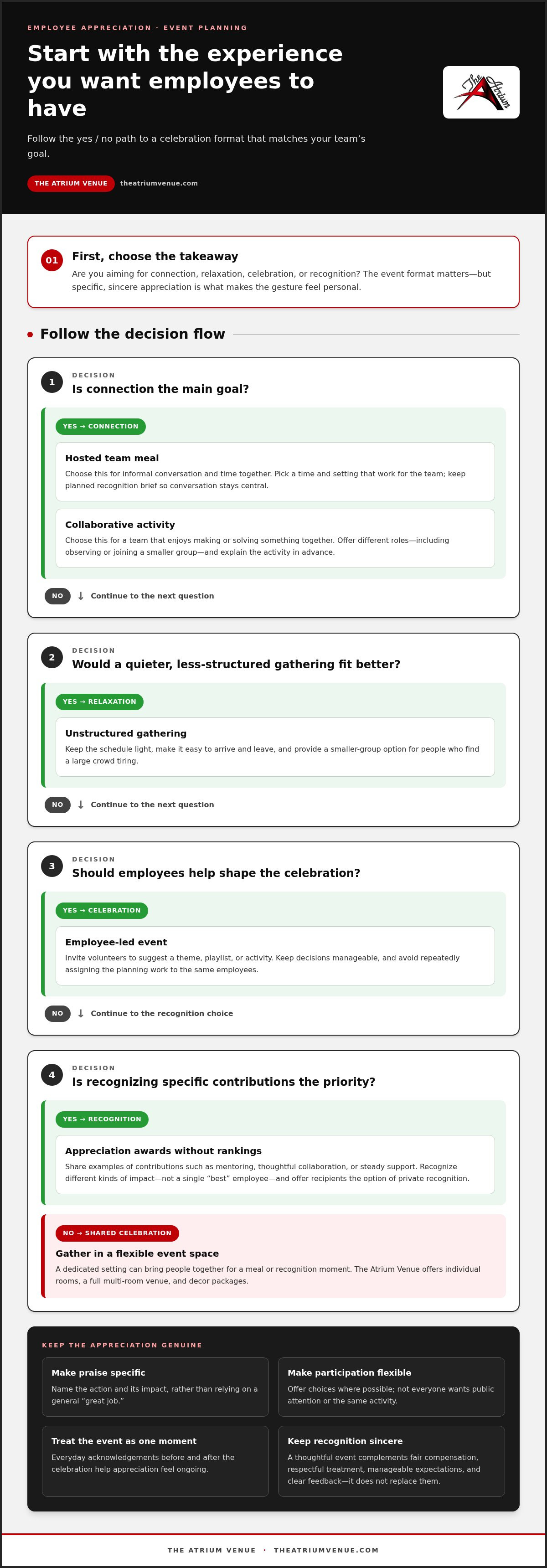
A long list of possibilities can make planning harder, not easier. Start with the experience you want employees to have, then choose an event that supports it. Do you want colleagues to connect, unwind, celebrate a shared milestone, or feel recognized for specific contributions? These employee appreciation event ideas are grouped by purpose to help you build a focused plan rather than combine activities that don’t fit together.
For each option, consider who may enjoy it and what organizers need to prepare. Keep participation flexible: a meaningful event doesn’t require everyone to enjoy the same activity or take part in the same way.
Connection: Hosted team meal. A shared meal suits employees who enjoy informal conversation and gives colleagues a natural reason to spend time together. Choose a time and setting that work for the team, then keep any planned recognition brief so conversation remains central.
Connection: Collaborative activity. A group challenge, interactive experience, or creative session can suit teams that enjoy doing something together. For instance, mobile entertainment options such as Inbound Golf provide engaging, low-pressure activities brought right to your venue. Offer a choice of roles, including observing or joining a smaller group, and explain the activity in advance so participation doesn’t feel compulsory.
Relaxation: Unstructured gathering. A casual get-together with time to talk may suit employees who prefer a quieter pace to games or performances. Keep the schedule light, make it easy to arrive and leave, and provide a smaller-group option for people who find a large crowd tiring.
Celebration: Employee-led event. Invite volunteers to suggest a theme, playlist, or activity, then choose a plan that reflects the team’s input. This can make the event feel less prescribed. Keep decisions manageable, and avoid repeatedly assigning the planning work to the same employees.
Recognition: Appreciation awards without rankings. Invite colleagues to share examples of contributions that reflect team values, such as mentoring, thoughtful collaboration, or steady support. Recognize different kinds of impact rather than selecting a single “best” employee. Prepare specific acknowledgements and give recipients the option of being recognized privately.
Shared celebration: A flexible event-space gathering. A dedicated venue can provide a distinct setting for a meal, recognition moment, or activity. The Atrium Venue offers an 8,300-square-foot event space with Platinum, Paragon, and Diamond rooms, available for individual-room or full multi-room rental. Its decor packages can help create a cohesive atmosphere. Explore event space for team celebrations as one option for shaping the setting around your plan.
For hybrid or distributed teams, pair an in-person gathering with a remote-friendly way to join the recognition. Share individual thank-you messages or invite remote colleagues to contribute nominations. Keep the shared moment focused, and don’t make attendance the only way employees can be acknowledged. A short, voluntary preference poll can help you choose between conversation, activity, recognition, or a combination without assuming one format suits everyone.
Which Employee Appreciation Event Format Fits Your Team?
The best format depends on how employees work, what makes participation comfortable, and what the gathering is meant to accomplish. A face-to-face celebration can create a shared experience, while a hybrid or distributed approach may include people who work in different places or can’t attend in person. Before settling on a plan, consider schedules, access needs, comfort with group events, and whether employees want live interaction or a more flexible way to take part.
The right format is the one employees can meaningfully join. Use this comparison to narrow your options before choosing among specific employee appreciation event ideas.
In-person gatherings for shared recognition
Meeting face to face can be a good fit when the goal is to strengthen connections or celebrate a collective achievement. A meal, short recognition program, or shared activity can bring people together, especially when the schedule leaves room for conversation instead of filling every moment with planned entertainment.
Let the activity determine the scale and layout. A seated meal needs a different arrangement from a standing reception or a group activity. A flexible event space can support different gathering styles. The Atrium Venue offers individual rooms and a full multi-room venue, giving organizers options for shaping the setting around their event plan. Make the invitation clear about the purpose and schedule. If employees can’t attend or don’t feel comfortable in a group setting, offer another way to receive thanks or participate, such as a personal message or separate recognition conversation.
Hybrid or distributed celebrations without second-class participation
For a hybrid event, plan one shared recognition moment that remote and in-person employees can access. Keep it focused. For example, a leader can share specific acknowledgements while remote colleagues have a clear way to contribute. Avoid making the in-room audience the main event and treating remote staff as observers.
For distributed teams, recognition can reach employees across locations without requiring everyone to join at the same time. Send the schedule and participation instructions in advance, including how employees can share a note, nomination, or response if they can’t attend live. Consider work schedules and access needs when setting the timing, and clearly explain alternative ways to participate. A format feels inclusive when employees know how to take part and their contributions receive genuine attention, wherever they’re joining from.
How to Plan an Employee Appreciation Event Employees Can Enjoy
A clear planning sequence keeps the event focused on employees rather than logistics alone. Start with the reason for gathering, then use employee input to narrow your employee appreciation event ideas. You don’t need to satisfy every preference. You do need to make thoughtful choices, explain them clearly, and create more than one comfortable way to participate.
Set the purpose and build the event around employee input
Choose one primary goal before selecting an activity: gratitude, connection, celebration, or peer recognition. Then invite brief, voluntary input through an anonymous pulse or a simple question. Ask what kinds of activities employees enjoy, what format works for them, and whether organizers should consider any access needs. Don’t ask for personal details people haven’t chosen to share. Use responses to shortlist practical options, rather than promising to meet every request.
Make participation clear before, during, and after the event
Employees can make informed choices when they know what to expect. Share the purpose, schedule, participation options, and any preparation in advance. During the gathering, make the recognition moment clear and specific, while leaving room for conversation or quiet participation. Afterward, invite concise feedback and carry useful lessons into future planning. Keep appreciation going with sincere, timely acknowledgements in everyday work.
Use this sequence to move from a good intention to a well-organized event:
Set the purpose. Choose one main outcome, such as recognizing a team effort or creating time for colleagues to connect. Let that goal guide the event’s scope and schedule.
Learn preferences. Ask a short, voluntary question about activity styles, timing, and participation needs. Make it easy to respond without attaching a name, and explain how the input will inform the plan.
Choose a format. Select an event style that supports the goal and suits employees’ work arrangements. Decide whether participation will be in person, hybrid, or distributed, and build in a lower-pressure way to join.
Plan access and flow. Consider the timing, room arrangement, movement between activities, and alternatives for employees who can’t attend or prefer not to join a group moment. Keep the schedule realistic, with space for informal interaction.
Communicate the details. Send an invitation that explains why the team is gathering, when and where it will happen, what the schedule includes, and how employees can participate. If recognition is planned, prepare specific examples and avoid surprise spotlights that may make someone uncomfortable.
Follow up. Invite feedback with a brief question about what worked and what could change. Thank employees for their input, then continue recognizing contributions in timely, personal ways.
Planning summary: Set a purpose, gather voluntary employee input, choose an inclusive format, plan access, communicate expectations, and follow up with feedback and ongoing recognition.
If an in-person gathering fits your plan, explore event space for employee celebrations and shape the setting around your event’s purpose and preferred format.
Create a Memorable Employee Appreciation Event in a Flexible Venue
The setting should support the way employees will participate, not compete with the reason for gathering. Before choosing a room or planning the atmosphere, map the event’s flow. Will guests move between activities, stay together for a recognition moment, or have space for smaller conversations? A clear plan helps organizers choose a welcoming setting and keep appreciation at the center.
Match the event plan to a room or multi-room setting
Start with the main activity. A seated meal or presentation may work best with one central gathering area, while an event that includes conversation, recognition, and a collaborative activity may benefit from distinct areas or a multi-room flow. Think through how guests arrive, where the shared moment will happen, and whether people should be able to step aside for quieter conversation.
The Atrium Venue offers an 8,300-square-foot event space with the Platinum, Paragon, and Diamond rooms. Clients can rent an individual room or the full multi-room venue, giving organizers different layout possibilities for their plan. Let the event’s format and intended flow guide the choice, rather than choosing a larger or more elaborate setting simply because it’s available.
Use decor to make appreciation feel intentional
Decor can help establish the tone, whether the goal is a warm team celebration, a polished recognition moment, or a relaxed opportunity to connect. Start with the feeling you want employees to experience, then choose visual details that support it. A cohesive setting can make the event feel considered without making decorations the main attraction. Customizable professional decor packages can also simplify styling decisions. For ideas on coordinating decor with an event’s layout and flow, see this guide to multi-room event flow.
Keep employee comfort in view as you plan. Leave enough space for the chosen activity, make any recognition area easy to approach, and avoid layouts that make participation feel like a performance. A corporate event venue comparison can help frame the practical considerations behind your setting choice.
Turn the idea into a welcoming event plan
Before sending invitations, put the essentials into a short event brief: the purpose, preferred format, participation options, room plan, and recognition moment. Use the brief to check that the space and atmosphere serve the same goal. Then write an invitation that explains why the team is gathering, what to expect, and how employees can take part. Clear, warm communication helps everyone arrive with a sense of what the celebration is about.
If an in-person celebration fits your plan, The Atrium Venue’s room options and decor packages can help shape the setting. A thoughtful layout and coordinated atmosphere can make the event feel intentional, while the appreciation itself stays where it belongs: with your team.
Shape a Celebration Your Team Can Make Its Own
Start with a simple next step: write a one-sentence intention for the gathering. It might be to recognize a demanding project, welcome a new chapter, or create time for colleagues to connect. Use that intention to guide your employee appreciation event ideas, so the details feel connected rather than assembled from a checklist.
Then give the plan room to reflect your team. A celebration doesn’t need to be elaborate to feel considered. A clear purpose, welcoming atmosphere, and sincere recognition can make the occasion personal. For an in-person event, the setting and decor can support the tone without becoming the focus.
Explore The Atrium Venue’s event spaces and decor packages to plan a celebration that feels right for your team. A thoughtful first step can help set the tone for a meaningful occasion.
Frequently Asked Questions
What are some unique employee appreciation event ideas?
Try a team “behind the work” showcase where volunteers share a useful lesson, a project milestone, or a small win others may not have seen. Keep contributions brief and let employees participate by sharing, listening, or submitting something in writing. Another option is a team time capsule: collect notes about what the group accomplished and hopes to carry forward, then revisit them at a later gathering.
How do you make an employee appreciation event meaningful?
Connect the occasion to real contributions employees recognize as valuable. For example, thank the people who made a handoff smoother, helped a colleague learn a process, or kept a project moving through a difficult stretch. Give credit accurately, and don’t frame appreciation as a request for extra work. A genuine gesture recognizes what employees have given rather than creating another obligation.
How can you include remote employees in an appreciation event?
Give remote employees a meaningful way to contribute that doesn’t depend on joining a live call. Invite them to send a short written reflection, submit a peer thank-you, or share a message to include in the celebration. If there’s a live portion, state the time and participation options clearly. Make the recognition available afterward so different schedules don’t determine who gets acknowledged.
What employee appreciation activities work for a small team?
Small teams can keep activities simple and personal. Try a prompt-led roundtable where each person can name one helpful moment from a recent project, or create a shared list of team lessons and wins. A casual breakfast or coffee gathering can also work if it suits the group. Keep sharing optional, since public attention can feel especially intense in a small room.
Should employees help plan an appreciation event?
Employee input can help organizers avoid choosing an activity that doesn’t suit the team. Invite volunteers to give feedback on the format, timing, or tone, while keeping final logistics with the planning lead. Make the role clear and manageable, and rotate opportunities to contribute rather than relying on the same helpful colleagues each time. Employees should be able to share preferences without taking on planning duties.
How long should an employee appreciation event last?
Choose a length that suits the activity and employees’ schedules rather than following a fixed rule. A short gathering with one recognition moment may be enough for a busy team, while a meal or activity may call for more time. Put the start and end times in the invitation, keep the schedule focused, and avoid making attendance feel like an open-ended commitment.
How can managers make appreciation feel sincere during an event?
Prepare a few accurate, specific examples instead of relying on broad praise or reading a long list of names. A manager might explain how a colleague’s careful review caught an issue before it affected a handoff, then thank them for that contribution. Share credit fairly, keep remarks natural, and don’t pressure anyone to respond publicly. A brief, genuine acknowledgement can feel more personal than a scripted speech.


Comments