

Event Lighting and Ambiance Guide: Set the Right Mood
What if the best event lighting plan had less to do with choosing a color and more to do with what guests will be doing next? A welcoming arrival, a focused presentation, and a lively reception each call for a different feel. This event lighting and ambiance guide will help you make practical choices that support the event from beginning to end.
It’s easy to worry that a room might feel too dim, too harsh, or out of step with the decor. Plan lighting around the event’s flow, not just its color palette. Ambient, task, and accent lighting each play a different role, and their balance can change as guests move through the schedule.
Room layout, activities, decor, and photography all influence lighting decisions. At The Atrium Venue, the 8,300-square-foot multi-room space includes the Platinum, Paragon, and Diamond rooms, so room choice can help shape the plan. Professional decor packages can also support a cohesive visual direction. With a few practical steps, you can create an atmosphere that feels comfortable, intentional, and suited to each key moment.
Table of Contents
What event lighting and ambiance mean for a successful gathering
Guests experience a room as a whole, not as a collection of separate choices. Event ambiance is the combined impression created by lighting, decor, layout, and activity. A softly lit dinner with closely arranged tables feels different from a presentation set up around a speaker, even in the same room. Lighting connects these elements by shaping what guests notice and helping them see where to go and what to focus on.
Intentional event lighting uses brightness, direction, and color to support the event’s mood while keeping activities and spaces visible. That balance matters: attractive light can add character, but it also needs to work for the people using the room.
How lighting influences the feel of an event
Brightness affects how open or intimate a space appears. Direction matters, too. Light spread across a room establishes an overall feel, while light focused on a table, speaker, or display draws attention to that area. Color adds another layer. When coordinated with the decor, it can make the visual palette feel warmer, cooler, more formal, or more playful.
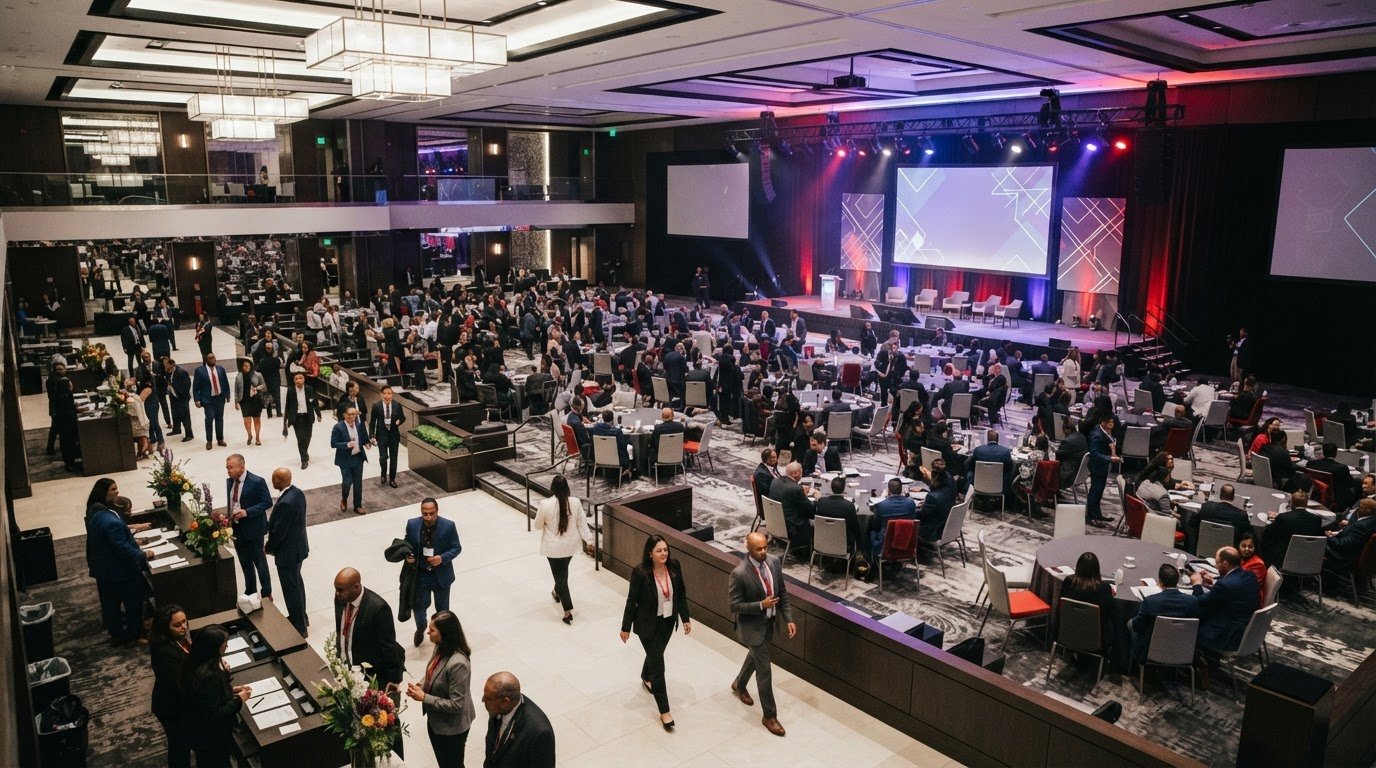
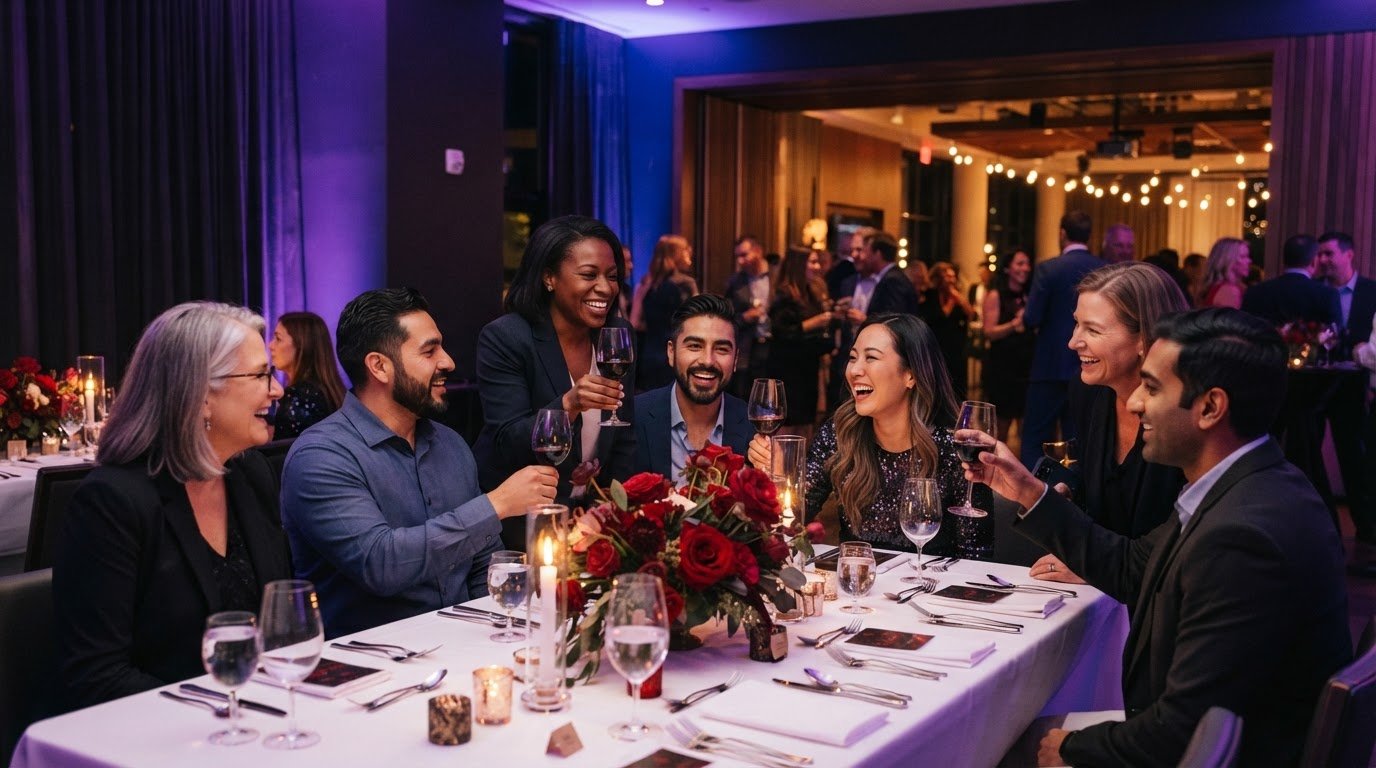
Picture a relaxed dinner. Softer, warmer-looking light around the tables may suit an unhurried setting, while enough general illumination helps guests see their food and one another. A presentation has different priorities. Clear light on the speaker or presentation area makes that focal point easier to follow, while the surrounding room remains comfortable for the audience.
These are planning cues, not guarantees of how every guest will respond. The effect depends on the room, the event, and the people in it. For a broader look at how lighting can shape a performance space, Stage lighting explains common approaches and their role in creating visual effects.
Why atmosphere and visibility need to work together
Decorative lighting gives a room character, but it shouldn’t make practical areas difficult to see. Guests need to identify entrances, find their seats, move between activity areas, and participate comfortably. Consider the full route through the space, not just the most photographed backdrop. A striking focal area works best when it fits into a room that remains easy to understand and use.
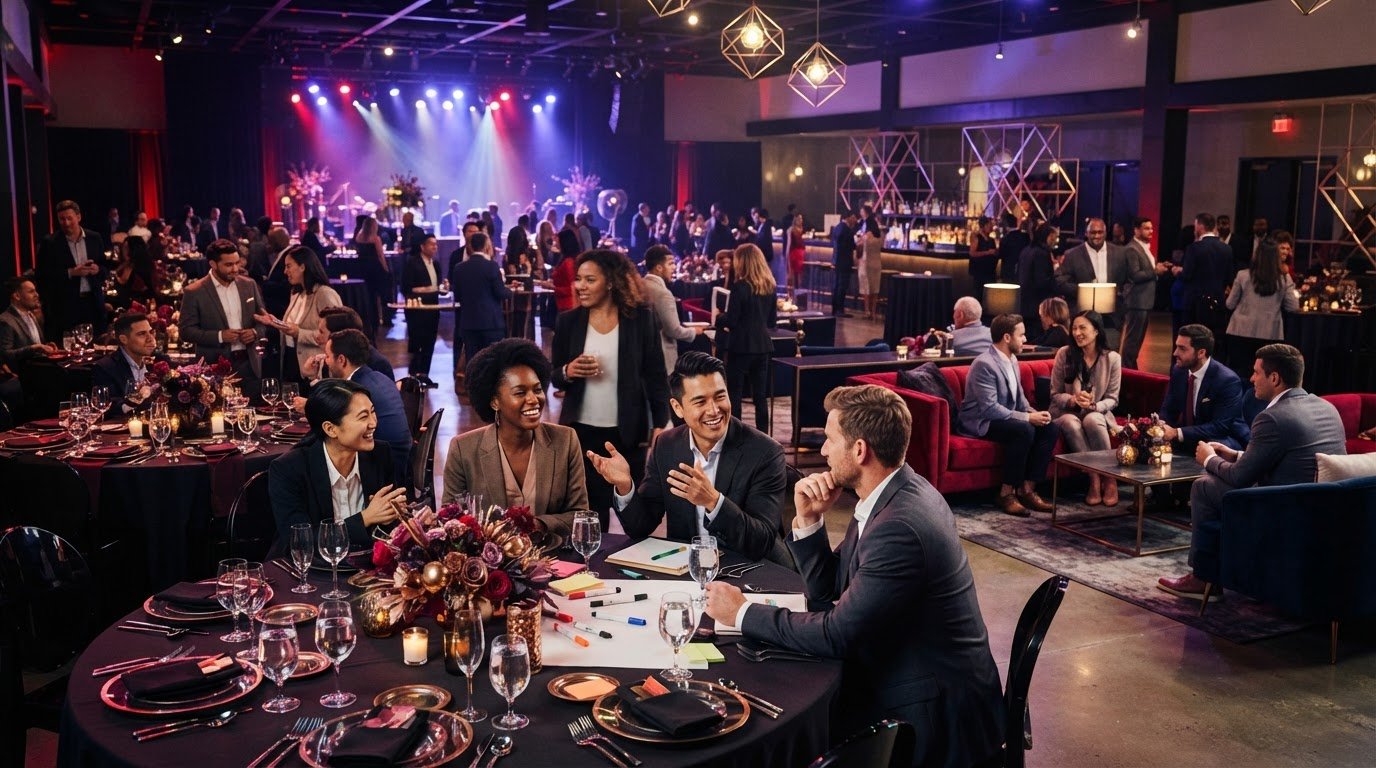
The event’s purpose guides the balance. During a presentation, guests need to see the speaker and follow along while the room still feels welcoming. At dinner, tables need comfortable visibility without losing the intended atmosphere. For dancing or another active part of the event, lighting can help define the activity area while keeping nearby seating and pathways easy to see.
As you plan, consider three practical checks:
Comfort: Does the light suit the activity and the time guests will spend there?
Clear sightlines: Can guests see speakers, dining spaces, entrances, and key features?
Coherence: Do lighting, decor, and room arrangement feel like parts of the same event?
A successful event lighting and ambiance guide starts with this combined view. Mood and function aren’t competing goals. Thoughtful choices can make the space feel intentional and welcoming while supporting the gathering from one activity to the next.
How layered lighting creates a comfortable, memorable atmosphere
A useful lighting plan doesn’t rely on one source to do every job. It combines general illumination with focused light for activities and selective highlights for visual interest. These layers add depth while helping guests understand where to look and how to use the space.
Ambient, task, and accent lighting explained
Ambient lighting is the general light that lets guests see the room and move around. Task lighting supports a particular activity, such as reading a program, seeing a place setting, or following a presentation. Accent lighting draws attention to selected details, such as a floral arrangement, display, or architectural feature. Each layer has a different purpose, so the plan can feel considered without relying on one uniform level of light throughout the room.
Start with the ambient layer, then identify where focused visibility would help. Add accent light selectively to draw attention to chosen details. For example, a registration area may need useful light for checking names, while a nearby display can be highlighted as a point of interest. The goal isn’t to illuminate every surface equally. It’s to make the room easy to use and give important features room to stand out.
Ambient light helps guests see the room, task light supports what they’re doing, and accent light highlights what you want them to notice. This distinction is a useful starting point for an event lighting and ambiance guide, especially when a room needs to serve more than one purpose.
Color, brightness, and dimming choices
Light color can influence how a space looks. Warmer light often gives a setting a softer, more intimate appearance, while cooler light can feel crisp and clear. Neither is right for every gathering. Consider the event’s mood, decor colors, and activities, then aim for a combination that feels consistent rather than choosing a color in isolation.
Color rendering describes how faithfully a light source shows the colors of objects. This can matter when guests will see colorful decor, clothing, food, or printed materials. If color is an important part of the experience, consider how it appears under the planned lighting rather than relying only on how a hue looks in a reference image.
Dimming can help shift the balance between layers as an event changes pace, but it depends on compatible lighting and control equipment. Plan adjustments with visibility in mind: lowering brightness for a quieter moment shouldn’t make pathways, seating, or activity areas hard to see. Reviewing the room at the different planned settings can reveal where the atmosphere feels balanced and where a practical area needs more light.
Room layout affects where each layer will be most useful. The Atrium Venue’s multi-room event space gives planners room to consider how lighting zones relate to the event arrangement and decor. A layered plan can give each area a clear role while helping the full space feel visually connected.
How to compare lighting choices for different event moments
Instead of asking which lighting option is best overall, start with what guests need to see and do at each point in the schedule. Soft, general illumination can support a comfortable setting across a room. More focused light can draw attention to a speaker, dining area, or other activity. These approaches can complement each other, and the lighting doesn’t have to stay the same throughout the event.
Match the lighting approach to the event format
A social gathering benefits from spaces that feel easy to talk in, while a presentation needs a clear focal point and an arrangement that keeps the speaker and screen visible. A wedding reception may move through several needs: guests arrive, gather for dinner, listen to speeches, then celebrate. The lighting plan can account for these changes without assuming every reception needs the same color or brightness.
Use a simple planning list to connect each moment with its purpose. These entries are prompts, not technical specifications. Adapt them to the room, layout, schedule, and atmosphere you want to create.
Event moment: Arrival. Guest need: Find the entrance, get oriented, and feel welcomed. Lighting consideration: Keep the arrival area easy to see, with a visual cue leading guests toward the gathering.
Event moment: Dining. Guest need: See the place setting and comfortably interact with others. Lighting consideration: Consider the tables as well as the wider room, so the dining area feels connected to the event’s overall look.
Event moment: Speeches. Guest need: See the speaker and stay focused on the moment. Lighting consideration: Give the speaking area visual attention while preserving clear views for seated guests.
Event moment: Dancing. Guest need: Recognize the activity area and move through the room comfortably. Lighting consideration: Define the dance space without losing sight of nearby seating and routes through the room.
Coordinate lighting with decor and photography
Light can change how decor appears. Linens, flowers, and other colors may look different under warmer or cooler light, so consider the palette in the room’s actual lighting rather than judging each element separately. A decor package can help establish a coordinated visual direction. Use that direction as a reference when considering how lighting will complement the setting.
Think about people and cameras, too. Faces should remain visible during conversations and speeches, and reflective surfaces may catch light in distracting ways depending on their position. Consider where guests are likely to take photos, where a photographer may stand, and what will be behind the subject. Reviewing those viewpoints can reveal glare, competing focal points, or a background that feels out of step with the rest of the room.
This event lighting and ambiance guide is a starting point for making choices around the event’s flow. Use the prompts to identify priorities, then adjust the plan to suit the room and decor. At The Atrium Venue, flexible event space offers room-layout options to consider as you map each moment.
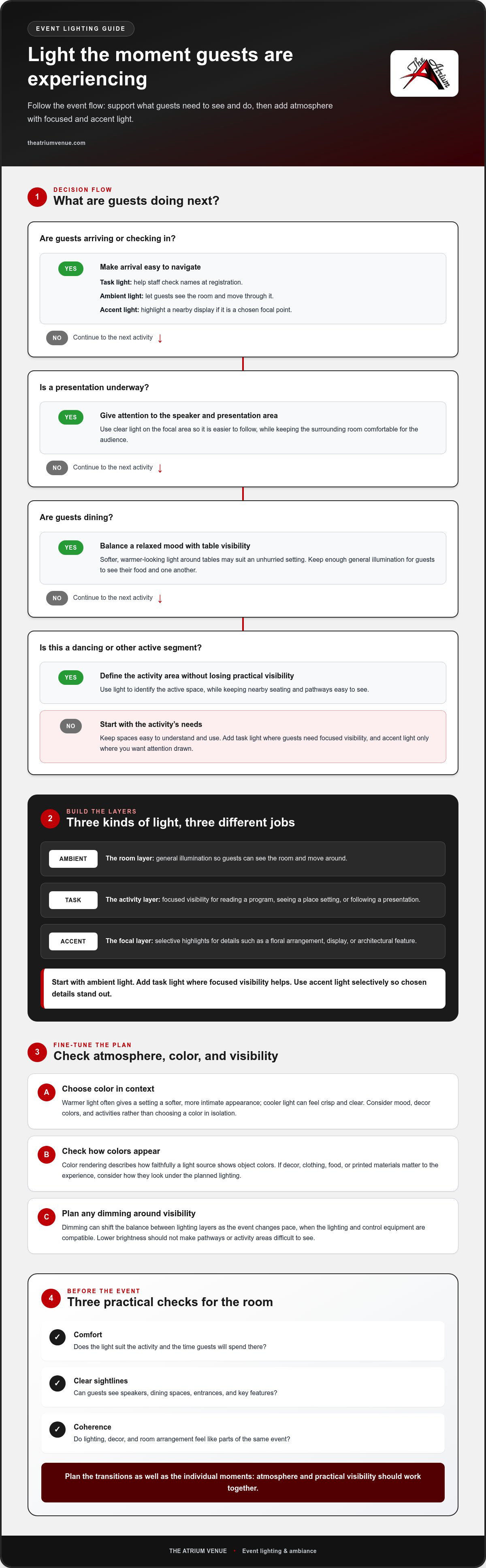
A practical event lighting plan, from mood board to room check
A clear plan turns the event’s desired feel into choices you can review against the room and schedule. Start with the guest experience, then map how each area will be used. This keeps visual ideas connected to practical needs instead of treating lighting as a last-minute finishing touch.
Build a lighting brief around the event schedule
Begin with the event type, the atmosphere you want to create, and the moments guests should notice. Sketch the layout and mark arrival, conversation, dining, presentation, and entertainment areas. Then note when each space changes purpose. A dinner that transitions into dancing, for example, may need a different emphasis later in the evening than while guests are seated.
Use this sequence to shape a simple brief:
Define the mood. Choose a few clear words, such as welcoming, celebratory, or focused, to guide the visual direction.
List the activities. Write down what guests will do, where they’ll do it, and which key moments deserve attention.
Map the zones. Mark entrances, seating, dining, presentation points, and pathways on a room plan.
Coordinate the decor. Consider how lighting will work with the event’s colors, materials, and focal details.
Review the plan. Walk through the schedule and room layout, checking that each area supports its purpose.
Keep the schedule simple. A few columns for time, activity, room zone, and desired feel can show how the space evolves. This event lighting and ambiance guide works best as a planning framework. Your notes connect each moment to a purpose without locking you into a technical specification too early.
Review guest comfort and room details
Before finalizing the plan, picture guests moving through the space and taking part in each activity. Review important routes, steps, seating, and activity areas for visibility. Look for glare on screens or reflective surfaces, and consider whether a speaker or focal feature will be visible from different seats. Where practical, assess the room from both seated and standing perspectives.
Visibility: Are entrances, routes, steps, seating, and activity areas easy to make out?
Glare: Could a screen, reflective surface, or direct line of sight become uncomfortable?
Transitions: Does the plan account for changes in activity or mood during the event?
Photography: Do likely camera positions have clear views of key moments, people, and decor?
Overall feel: Do the lighting plan, layout, and visual direction work together?
For decor inspiration to help shape the room’s visual direction, explore The Atrium Venue’s decor-package guide as you develop your plan.
Bring event lighting and decor together at The Atrium Venue
A thoughtful lighting plan starts with the event’s flow and the room where it will unfold. The Atrium Venue offers an 8,300-square-foot, multi-room event space with the Platinum, Paragon, and Diamond rooms. You can rent an individual room or the full venue, giving you options for shaping how guests gather and move through the event. Room choice helps frame the lighting brief: consider where each activity will happen, what guests should notice, and how the space will be used throughout the schedule.
Use room choice and event flow to guide the visual plan
Begin by mapping the event schedule to the room arrangement. Mark the areas for arrival, dining, conversation, presentations, or entertainment, then note any changes in purpose during the gathering. This helps clarify where general visibility matters and where the visual focus may shift. Whether you’re considering the Platinum, Paragon, or Diamond room, let the event’s layout and activities guide your planning rather than assuming each room needs the same approach.
For an event that uses more than one area, think about how guests will move between spaces and how each part should feel connected to the next. For a gathering centered in one room, consider how its arrangement supports the schedule, focal moments, and guest comfort. These observations can become a practical brief as you coordinate the overall look.
Coordinate the room’s look with a decor package
Professional decor packages offer a way to customize the event space and establish a visual direction. As you plan, consider how the decor palette, focal details, and lighting choices will work together. Decide which decor elements should draw attention and how lighting can complement them while keeping the space useful for the event’s activities. The package helps shape the room’s look; treat the lighting plan as a separate consideration that you coordinate with that direction.
Bringing these choices together makes the planning process more cohesive. Use the event schedule, preferred atmosphere, room layout, and decor direction to develop your plan. The Atrium Venue’s room options and decor packages give you a setting to shape around the gathering, whether you’re planning within one room or across the full venue.
Use this event lighting and ambiance guide as a starting point, then put the ideas into context with a space that fits your event. Explore The Atrium Venue and discuss your event plans.
Turn your lighting plan into a welcoming experience
Your lighting plan can do more than set a mood. It can help guests feel oriented, bring attention to meaningful moments, and make the event space feel connected to your purpose. Use this event lighting and ambiance guide as a starting point, then refine your ideas around the people, activities, and atmosphere you want to bring together.
Picture the event as guests will experience it, from the first welcome to the final activity. Think about which moments deserve focus, how the room should feel as the schedule changes, and how decor can support that visual direction. A thoughtful plan gives you a clear foundation for shaping an event that feels personal and comfortable.
The Atrium Venue offers a multi-room setting and professional decor packages to help customize your event space. Explore The Atrium Venue and start planning your event.
Frequently Asked Questions
What is the difference between ambient, task, and accent lighting?
Ambient lighting gives the room general visibility, such as overall illumination across a reception area. Task lighting supports a specific job, like seeing names at a check-in table. Accent lighting draws attention to a selected feature, such as a centerpiece or display. Together, they help keep the room usable, support activities, and make chosen details stand out. Adjust their balance to match what guests are doing.
What lighting is best for event photos?
Good event photos depend on illumination that feels comfortable in person and remains reasonably consistent across the places guests are photographed. During planning, consider whether faces are easy to see against the background and whether shiny linens, glassware, or decor may create distracting reflections. Identify likely camera positions, such as the entrance, dining tables, and speech area. Review each view in the space before finalizing the arrangement.
Can LED lighting flicker in event photos or videos?
Yes, visible flicker or banding can appear in event photos or video, but it doesn’t happen with every setup. The result can depend on the light source, dimming arrangement, camera, and recording settings. Before the event, test the planned lighting with the photo or video equipment intended for the occasion. Review both still images and short recordings using the settings that will actually be used, and adjust the setup if needed.
How can event lighting accommodate guests who are sensitive to bright or changing light?
Plan for comfortable, steady illumination by reducing unnecessary glare, abrupt changes, and overly intense effects. Keep routes and activity areas easy to see, even if other parts of the room use softer light. Include guest comfort in the planning conversation, and consider whether the layout allows a calmer area away from the most visually active space. These steps support an inclusive experience without assuming every guest has the same needs.
Should event lighting change during the event?
It can, if the event moves through activities with different visual needs. An event lighting and ambiance guide can note planned changes for arrivals, dining, speeches, or entertainment, so transitions feel considered rather than surprising. Decide in advance which moments call for a shift, and keep comfort and visibility in mind throughout. The schedule should reflect the room arrangement and the controls available for the lighting setup.
How do I keep event lighting from washing out table decor?
Strong, direct light can change how decor colors and finishes appear, so review the tables under the planned setup where possible. Look at linens, flowers, and reflective items from guest viewpoints, not only from across the room. Balance general illumination with selective accent light, and check likely photo angles for glare or faded-looking details. Seeing the actual decor in place makes it easier to spot adjustments before guests arrive.
Comments