

How to Budget for a Wedding Venue: Practical Guide for 2026
Updated: Oct 10
What if the venue with the lowest rental fee costs more once you account for the full event plan? Learning how to budget for a wedding venue means looking beyond the headline price to understand what your celebration will actually require. The rental fee is only one part of the comparison, and packages can include very different items.
If quotes are hard to compare or you’re worried that setup costs and required services may appear later, you’re not alone. Start with a spending limit that leaves room for your other priorities. Then compare each venue’s inclusions, added fees, and payment terms on the same basis.
This guide explains how to set that limit, compare quotes fairly, and confirm details before booking. You’ll see how guest count and room configuration affect your plan, which costs to ask about, and how to request an all-in estimate. With the details clear, you can choose a space that suits your celebration without letting the venue budget crowd out everything else.
How to Budget for a Wedding Venue: Table of Contents
How to Set a Realistic Wedding Venue Budget Before You Tour
Venue costs can be hard to pin down before you know what different spaces include. Start with a clear spending limit, not a guess based on a rental fee or a generic budget percentage. Your limit should reflect the funds available, your priorities, your guest list, and your event plans. Setting it before touring makes it easier to assess options without feeling pressured to stretch your budget.
A venue budget is the rental fee plus confirmed event-related charges required to hold and use the space. Keep that figure separate from your overall wedding budget, which also needs to cover the other elements you choose. Cultural traditions and personal plans can shape those priorities; Wikipedia’s overview of traditional wedding costs offers broad context on the many components a wedding can involve.
Set your total. Write down the funds currently available for the wedding. If others are contributing, confirm the amount before counting it toward your budget.
Protect your priorities. Decide which parts of the celebration matter most before assigning money to the venue. Set aside a separate contingency reserve, and don’t count it as spendable venue money.
Estimate your needs. Use your current guest list and event plan to identify the kind of space and access you need.
Request quotes. Once you know your limit and requirements, ask venues for written quotes based on the same event details.
Start with your total wedding budget and non-negotiable priorities
List who is contributing and whether each contribution is confirmed. Then name your non-negotiables, such as guest experience, a particular event feature, or decor that reflects your style. Set aside funds for those priorities and your contingency reserve before deciding what remains for the venue. Avoid relying on a fixed allocation percentage unless it comes from reliable, current evidence that applies to your plans. A generic split may not reflect your guest count or chosen celebration.
Turn your guest count and event plans into a venue ceiling
Estimate attendance using the people on your current guest list, not everyone you might invite. Note whether you need ceremony space, a reception layout, or extra setup time. Then set a maximum venue spend that leaves room for your other priorities. Room configuration matters: The Atrium Venue has Platinum, Paragon, and Diamond rooms available individually or as a multi-room facility. Confirm current capacities and what each option includes before comparing costs.
What Belongs in a Wedding Venue Budget Beyond the Rental Fee?
A rental quote is a starting figure, not necessarily the total cost of holding your event. To understand how to budget for a wedding venue, list every event-related item and mark it as included, required, optional, or externally arranged. This helps you see what the venue will provide, what you must pay for, and what still needs a separate plan.
Included: Items the written quote or agreement explicitly covers. Confirm the details rather than relying on assumptions.
Required: Charges or arrangements you must accept to use the venue, such as specified staffing or setup requirements, if applicable.
Optional: Add-ons you can choose, such as decor. Ask for the exact contents and any related fees before comparing packages.
Externally arranged: Items you’ll need to book or provide separately. Confirm whether the venue has restrictions or requirements for outside vendors.
Separate venue fees from optional services and outside vendors
Check payment timing, extra charges, and contract terms
Get the financial details in writing before comparing one quote with another. Record the deposit amount, payment milestones, final-payment deadline, and conditions for refunds or cancellation. Ask how the venue handles overtime, late changes, damage, and additional setup time. Confirm whether taxes or service charges apply, how they’re calculated, and whether they’re included in the quote. For tax questions, check with the venue and relevant authorities rather than assuming the same rules apply everywhere.
A comparison note can keep a low headline fee from obscuring a higher event total. Separate confirmed charges from estimates and unanswered questions, and request an updated written quote when details change. You can explore event space options and ask for current rental inclusions, decor package details, fees, and payment terms.
How to Compare Wedding Venue Quotes Without Missing Hidden Costs
The lowest headline rental fee may not mean the lowest total. One venue’s quote might include access and furniture, while another lists them separately or leaves them unconfirmed. To compare fairly, request an itemized written quote from each venue for the same date, guest count, and event schedule. Mark every item as included, optional, required, or unconfirmed. Treat unanswered items as unresolved, not included.
Use the same questions for every venue quote
Ask which room and layout the quoted amount covers, what access hours are allowed, and whether setup time is part of the booking. Record each venue’s response using the checklist below. Get written clarification for anything unclear before comparing totals or making a decision.
Compare room configuration and event requirements
Check that the room configuration suits your guest count and planned layout, not just that the space looks appealing during a tour. Ask whether your ceremony, cocktail period, and reception can use one area or require room changes, and whether those transitions affect access or setup needs. Multi-room layouts—such as those offered by purpose-built event spaces like Glasshouse Downtown—can offer different ways to organize an event, but configurations and terms vary by venue.
The Atrium Venue offers Platinum, Paragon, and Diamond rooms individually or as a multi-room facility. Confirm current room capacities and quote inclusions directly. If decor affects your comparison, review the scope of professional event decor packages, then verify the exact contents with the venue. This is an important part of how to budget for a wedding venue: compare what each quote covers, not just its first number. Explore event space and decor options as you build your shortlist.
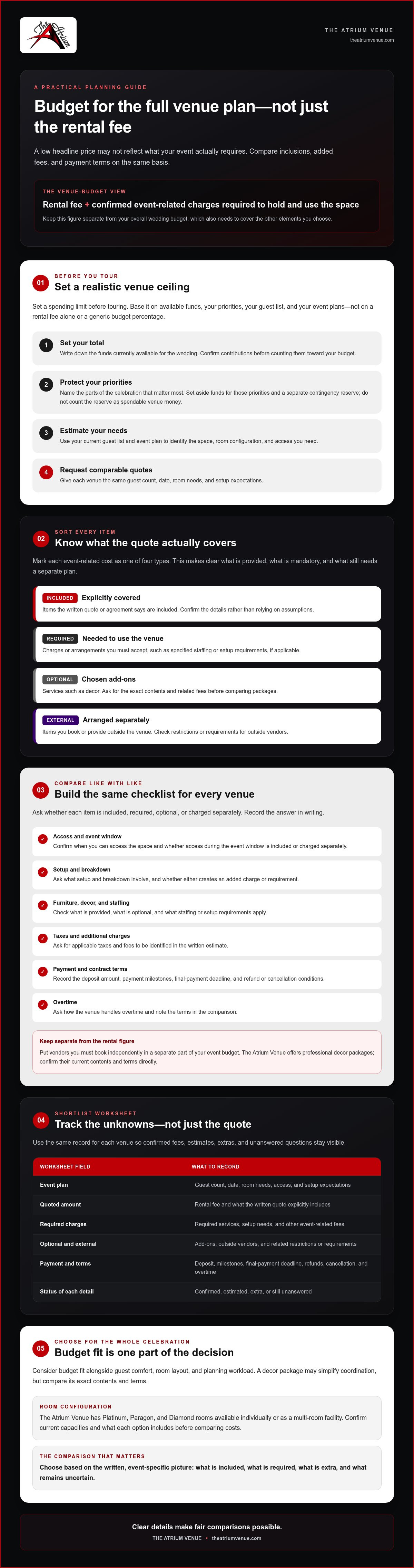
A Step-by-Step Wedding Venue Budget Worksheet for Your Shortlist
A consistent worksheet turns each venue’s quote into a clear record you can revisit and compare. Use one copy per venue, and keep the quote or contract alongside it. You’ll be able to see which figures are confirmed, what might change, and what still needs an answer before you decide.
Fill in the worksheet before requesting final quotes
Start with your event details so every venue responds to the same plan. Note your budget ceiling and decision deadline, then record any needs you’re prepared to arrange separately.
Venue details: Venue name, contact person, contact information, quote date, and quote version.
Event plan: Event date, estimated guest count, schedule, and desired room setup.
Budget: Your maximum venue spend and the date by which you need to make a decision.
Requirements: Must-have items or services, plus anything you’re willing to arrange independently.
Review the numbers and decide what to clarify
Record an amount only when it appears in a written quote or contract. Keep confirmed fees separate from optional extras and estimates. If an amount or term is missing, label it “unconfirmed” and write down the question you need answered. Never combine confirmed costs with unknowns. An incomplete total can make a venue appear to fit your budget when it may not.
Confirmed charges: List each written fee and its stated payment timing.
Optional items: Record each extra separately, noting whether the venue supplied a written estimate.
Unanswered questions: Track missing amounts, unclear terms, or details awaiting confirmation.
Comparable total: Add only the confirmed figures needed for your planned event. Keep estimates visible beside the total, but don’t treat them as confirmed costs.
Compare each venue against the same budget ceiling and event requirements. If one quote leaves setup needs or a contract term unclear, ask the venue to confirm it in writing before weighing that option against a more complete quote. Update the worksheet whenever you receive a revised quote, and label the new version so you don’t accidentally compare outdated figures.
This record supports how to budget for a wedding venue with more confidence: you can distinguish a known commitment from a possible extra and decide what information you need next. To compare room options as you build your shortlist, explore event space options and confirm current details directly with the venue.
Choose a Wedding Venue That Fits Your Budget and Celebration
A venue can fit your budget on paper and still be the wrong choice for your celebration. Make your final decision by weighing the confirmed total alongside guest comfort, room layout, included services, and the time you’ll need to coordinate the event. The right fit supports the experience you want without taking funds away from other wedding priorities.
Decide which trade-offs matter most to your wedding
Start with the needs that affect how guests move through the day. Consider whether the room layout suits your ceremony and reception plans, whether the space feels comfortable for your expected attendance, and which written inclusions will make planning easier. A simpler rental may leave you more flexibility but could mean arranging more details independently. A decor package may streamline choices, but confirm exactly what it covers before factoring it into your decision.
The Atrium Venue is an 8,300-square-foot event facility with Platinum, Paragon, and Diamond rooms, available individually or as a multi-room venue. Discuss the room configurations in relation to your guest count and event flow. Professional decor packages are also available. Confirm current room capacities, rental inclusions, package contents, fees, and payment terms directly before deciding whether those options suit your plans.
Compare each venue’s confirmed total with your spending ceiling. Ask whether the remaining wedding budget still supports the priorities you’ve already chosen. If a venue only works by relying on estimates or leaving essential needs unresolved, pause and get clear answers before committing.
Prepare questions before contacting a venue
Share your date, estimated guest count, event schedule, and preferred layout when asking for details. Request current pricing in writing, along with a clear list of inclusions, payment terms, and any decor package specifics. Ask which room options could fit your plan and whether a tour or consultation is available. Confirm current options directly rather than assuming availability or package details.
Use the answers to assess both cost and coordination effort. A venue that meets your layout needs and provides suitable confirmed inclusions may be a better overall fit than a lower quote that requires more separate arrangements. Review the details with anyone involved in the decision, then choose the space that supports your celebration and leaves room for what matters beyond the venue.
To discuss your event needs, explore The Atrium Venue and ask about its event space, room options, and decor packages.
Move Forward With a Venue Plan You Feel Good About
A confident venue decision starts with a clear spending ceiling and a full picture of what each quote covers. Compare venues using the same event details, keep confirmed charges separate from estimates, and check that your final choice leaves room for your other priorities. That’s the practical foundation of how to budget for a wedding venue.
The Atrium Venue offers an 8,300-square-foot event facility with Platinum, Paragon, and Diamond rooms available individually or as a multi-room venue. Professional decor packages are also available. Ask about current room capacities, rental inclusions, package contents, fees, and payment terms so you can compare options against your plans.
Ready to explore a space for your celebration? Explore The Atrium Venue and discuss your wedding plans. With clear questions and a realistic budget, you can take the next step toward a celebration that feels right for you and your guests.
Frequently Asked Questions
How much of your wedding budget should go toward the venue?
Set a venue spending ceiling based on your total available wedding funds, your priorities, and the event costs you’ll need to cover elsewhere. There isn’t one percentage that works for every celebration, especially since venue quotes can include different items. Before touring, decide what must remain available for other priorities and your contingency reserve. Then use written, itemized quotes to check whether each venue fits that limit.
What is usually included in a wedding venue rental fee?
How can you compare wedding venue quotes fairly?
Request itemized written quotes based on the same event date, guest count, schedule, and room setup. Compare access, setup, furniture, decor, staffing, taxes, and payment terms. Mark each item as included, optional, required, or unconfirmed, and ask for written answers to anything unclear. Keep confirmed charges separate from estimates. This gives you a more reliable comparison than ranking venues by the headline rental fee alone.
Can you negotiate the price of a wedding venue?
You can ask whether there’s flexibility, but don’t assume a venue will change its pricing or terms. Explain your event requirements and budget, then ask about options that could adjust the quote, such as a different date or room configuration, if those choices are available. You can also ask whether optional items can be removed. Request any agreed changes in writing and review the revised total and contract terms before deciding.
What hidden costs should you ask a wedding venue about?
Ask about charges that may sit outside the base rental, including setup or breakdown, extra access time, staffing, furniture, decor, overtime, damage terms, taxes, and service charges. Check whether outside vendors involve extra requirements or fees, and whether late changes affect your total. “Hidden” costs may be listed in the agreement, so review the contract carefully. Ask the venue to explain unclear language and provide a written, all-in estimate for your plans.
When should you book a wedding venue?
Start contacting venues once you have a workable date or date range, an estimated guest count, and a general event plan. Booking timing depends on your preferred date, venue, and current availability, so ask directly which options remain and how long a quoted offer or date hold lasts, if applicable. Before signing, confirm the event details, full costs, payment schedule, and cancellation terms in writing. Avoid committing while key budget questions remain unanswered.
Is a wedding venue decor package worth including in the budget?
A decor package may be worth considering if its confirmed contents suit your vision and could reduce the number of choices or arrangements you manage separately. Compare its written scope and cost with the decor you’d otherwise arrange, and check whether it fits your planned layout. The Atrium Venue offers professional decor packages, but confirm their contents and terms directly. Include a package in your comparison only after you know what it covers.


Comments